By: Tran Huynh and Edric Pauk
Published March 17, 2026
As SCEC prepares to launch its first cohort of Technical Activity Groups (TAGs in 2026), early community response signals both strong enthusiasm and a broad recognition of the opportunity these groups represent. Nineteen letters of intent, involving roughly 180 participants, were submitted in November 2025, reflecting broad engagement with this new Team Science framework and a shared interest in advancing integrative earthquake science with relevance to understanding seismic hazard and preparedness in California and beyond.
TAGs represent an evolution of SCEC’s long‑standing approach to coordinated, investigator‑driven research. Designed to organize the community around high‑priority interdisciplinary challenges, TAGs are intended to bring together diverse teams to address problems that are difficult to tackle within smaller, individually scoped projects. In doing so, they build on more than three decades of SCEC’s support for collaborative research on the San Andreas Fault System.
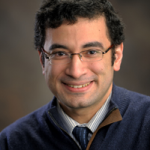
“Bringing together an interdisciplinary team of scientists to work on complex challenges is something SCEC is well-positioned to do,” says SCEC Director Ahmed Elbanna. “We are excited to launch this first cohort, which will help us bring the benefits of SCEC’s science to society at large.”
The breadth of TAG concepts submitted illustrates the scientific opportunities ahead. Proposed efforts span topics including ground‑motion simulations and validation, impactful earthquake scenarios, next‑generation earthquake simulators and forecasting, fusion and use of Community Earth Models, and a range of focused regional and disciplinary studies. Together, these concepts align strongly with SCEC’s mission and with national priorities for advancing seismic hazard assessment and mitigating the cascading impacts.
At the same time, the level of interest exceeds what can be supported within the current 2026–2027 SCEC program budget. In response, the Science Steering Committee (SSC) has been discussing how best to identify synergies across the proposed efforts and encourage integration where scientific goals overlap. The aim is to help steer the community toward combinations of ideas that can deliver greater impact through shared infrastructure, benchmarks, and collaboration.
“Our goal is to help steer the community toward integrated science by identifying where these efforts can merge for maximum impact advancing earthquake system science,” notes SSC Chair and SCEC Co‑Director Greg Beroza.

SCEC science leadership will work closely with teams as they refine their concepts, and will maintain transparency about resource constraints throughout the process.
The first cohort of TAGs, to be launched in 2026, is expected to advance SCEC’s highest‑priority scientific objectives. These include improving the integration and accessibility of Community Earth Models; developing impactful earthquake scenarios for California; advancing ground‑motion simulation and validation; strengthening the use of simulated and recorded ground motions in engineering and seismological applications; and pushing forward next‑generation earthquake simulators and forecasting capabilities. Additional emphasis will be placed on post‑earthquake investigations and on engaging the broader community in earthquake preparedness.
SCEC’s priorities for TAGs are also closely aligned with the U.S. Geological Survey strategic objectives, including improvements to the National Seismic Hazard Model, advances in physics‑based ground‑motion simulation, constraints on earthquake rupture and recurrence, and scenario‑based products with clear societal relevance.
SCEC will release the TAG Request for Proposals (RFP) at the end of March 2026, with full proposals due by May 8, 2026. All submissions will be evaluated by the Proposal Review Committee (PRC) for their scientific merit, alignment with SCEC priorities, and feasibility within overall program capacity.

“The PRC will have a difficult task reviewing the very competitive proposals that will result from these outstanding TAG concepts,” says PRC Chair Alice Gabriel. “Our job will be to conduct a fair and transparent evaluation to recommend a balanced portfolio of projects with strong scientific merit and realistic multi‑year plans to the SCEC Board for final approval.”
Each TAG will operate under a clearly defined workplan and timeline, engage a broad team of participants, and conclude upon achieving its stated goals. Depending on scope, TAGs may receive support for workshops, targeted research activities, and technical or logistical assistance from SCEC staff.
The TAG launch builds on an earlier RFP issued in October 2025, supported by NSF funds, that solicited proposals for workshops and training activities. Eight workshops are scheduled for March through September 2026 and are expected to engage several hundred investigators and students. These activities will directly inform the refinement of TAG concepts and research priorities in the years ahead.
“The TAG concepts we received reflect the incredible vibrancy of our community and the potential of this Team Science approach,” Elbanna concludes. “SCEC is committed to using its available funding to amplify the transformative potential of this work, and we are very excited to see the formal proposals come together this May.”
A summary of all TAG concepts currently under development appears below. Researchers are encouraged to review these concepts, identify complementary efforts, and reach out to coordinators where their expertise can contribute most effectively. Broad participation at this early stage will be essential to ensuring that TAGs are well integrated, ambitious, and positioned to deliver research that matters for earthquake preparedness in California and beyond.
Technical Activity Group (TAG) Concepts in Development
The follow are TAG concepts under development as of March 2026:
- Next generation ground motion simulation validation and utilization (GMSV+U) in seismic hazard & engineering applications
- Near Source Ground Motions (NSGM)
- Impactful Earthquake Scenarios for Urban California
- Source Complexities and Ground Motion Variability (SCGM)
- Dynamic Rupture Simulations of Scenario Large California Earthquakes
- Community Stress Drop Validation
- Community Near-surface Database
- Shallow Earth Materials
- Using Stress Models
- Integrating Community Research into a Consensus Geodetic Model
- Geodetic and Hazard Analysis (GHA)
- Multi-Scale Community Velocity Model
- The Next Generation 3D Community Fault Model for California
- Reinvigorating the Development of Multicycle Physics-Based Earthquake Simulators (MP-BES)
- Understand the Natural Recurrence of Earthquakes and Slip over Time (UNREST)
- Sequences of Earthquake and Aseismic Slip (SEAS)
- Creep Rate, Episodicity, and Earthquake Potential (CREEP)
- Fault interactions across the Cascadia – San Andreas transition
- SiERRa – Sierra Earthquake Risk Reduction
Have a new TAG concept? Complete this form to add it to the current list of TAGs under development: https://forms.gle/Ps3Bk595xZVAfvHQ8.
Next generation ground motion simulation validation and utilization (GMSV+U) in seismic hazard & engineering applications, Coordinator: Sanaz Rezaeian
This TAG will focus on Ground Motion Simulation Validation and Utilization (GMSV+U) for hazard and engineering applications in collaboration with simulation modelers. The objective is to develop validation approaches, standardize applications of validation methodologies, and carry out benchmark studies with guidelines and disseminated datasets for the utilization of simulations in hazard and engineering applications.
This is a cross-disciplinary team, including seismologists, computer scientists, and engineers committed to improving the pipeline from ground motion simulations to applications. Ground motion simulations have the potential to enhance societal preparedness and resilience through improved disaster planning and building codes. However, to achieve these impacts, users must trust the simulation results and have access to data products of interest.
We will focus on the following tasks: a) identify from prior work, and develop as needed, consensus-based approaches for ground motion simulation validation for specific hazard and engineering applications; b) work with simulation modelers to use these approaches to iteratively improve ground motion simulations; c) work with CEM TAGs to iteratively improve community models and quantification of uncertainties in simulations; d) disseminate validated simulation datasets to users in the hazard and engineering communities and collaborate with other community groups (e.g., COSMOS).
Addressing SCEC Priority Objectives: 3. Ground motion simulation and validation, 4. Utilization of simulated and recorded ground motions in engineering and seismological applications
Near Source Ground Motions (NSGM), Coordinator: Jeff Bayless
The proposed NSGM TAG organizing group is a cross-disciplinary team, including seismologists, engineers, computer scientists, researchers, and practitioners who have experience in studying near-source ground motions. This group comprises those who are performing research activities, including simulations, and those who are applying the research results in practice.
This TAG’s efforts will address two of SCEC’s high priority objectives: 1) ground motion simulation and validation, and 2) utilization of simulated and recorded ground motions in engineering and seismological applications.
To achieve these objectives, the TAG will coordinate in effort to progress research related to supershear ruptures, rupture directivity, directionality, and magnitude scaling; specifically with respect to the impacts on near-source ground motions from these phenomena. Because these topics are related, an organized, synergistic approach is critical. Along with targeted research efforts, we will coordinate to progress the implementation of this research in ground motion modeling, ground motion simulations, and engineering seismology practice. We will also coordinate with the GMSV TAG.
We will focus on the following main tasks: a) review prior work related to NSGM including those under the GMSV TAG: to summarize research efforts by the community at large, to identify research gaps, and to identify practitioner needs. From these, develop a set of NSGM TAG goals; b) collectively develop a research plan to achieve the TAG goals; c) perform targeted research; d) collaborate with the related GMSV TAG; and finally, e) provide recommendations for NSGM best practice in engineering seismology applications.
Addressing SCEC Priority Objectives: 3. Ground motion simulation and validation, 4. Utilization of simulated and recorded ground motions in engineering and seismological applications
Impactful Earthquake Scenarios for Urban California, Coordinator: Kate Scharer
Earthquake scenarios provide an organizing framework for studying plausible earthquakes, with the goal of advancing science and engineering research while creating products useful for risk reduction. This TAG will build on efforts like the 2008 ShakeOut Scenario and HayWired to develop a small number of detailed earthquake scenarios. The scenarios will aim to (i) improve characterization of plausible earthquake sources and ground motions; (ii) examine secondary effects; and (iii) assess impacts to the built environment and resulting economic and social consequences.
The first part of this work will be a partnership with the Dr. Lucy Jones Center for Science and Society to create a ShakeOut Scenario 2.0. The TAG will integrate experts from across SCEC, connecting social sciences, engineering, risk analyses, and earth science domains. We encourage involvement with partner organizations including EERI, NHERI, major utilities and infrastructure stakeholders, and state and local governments.
Addressing SCEC Priority Objectives: 2. Impactful earthquake scenarios for California
Source Complexities and Ground Motion Variability (SCGM), Coordinator: Badie Rowshandel
A study of seismic source complexity (geometric-rupture-slip) for improvement of seismic hazard estimation tools using published source data (e.g., SRCMOD) and ground-motion data (e.g., NGA-W, PEER-LBNL). Deficiencies in models often arise from over-simplification of a complex phenomenon or of elements of the model. For example, common parameters used in empirical GMMs to describe the source (e.g., M, TOR, HW) ignore the heterogeneity of co-seismic rupture and slip. This has negative impacts on model outputs. Improved characterization of seismic sources by accounting for heterogeneity of rupture and slip, as is proposed by this TAG, would result in more realistic and reliable estimates of hazard.
The final scope be determined after a “scoping meeting” of the TAG, with preliminary targets as:
- Study the variability of rupture and slip on fault surface areas of medium-to-large-earthquakes, to identify new source parameters of high impact on ground-motion.
- Study the regional variability of ground motions of medium-to-large-earthquakes, and of model prediction errors as functions of (new) source parameters.
- Investigate the degree of correlation of the variability of ground-motions with variability of “impactful” source parameters for:
- Use as functional parameter(s) in GMMs,
- Correction of GMM predictions,
- Improved characterization of sources in kinematic models.
- Work with CFM TAG toward enhanced-CFM and perhaps a new “CM”.
- Implement in seismic hazard estimation tools and study implications for various applications.
Addressing SCEC Priority Objectives: 1. Community Earth Models (CEM) integration and accessibility, 2. Impactful earthquake scenarios for California, 3. Ground motion simulation and validation, 4. Utilization of simulated and recorded ground motions in engineering and seismological applications
Dynamic Rupture Simulations of Scenario Large California Earthquakes, Coordinator: Ruth Harris
This TAG aims to include the sometimes-missing earthquake source physics in scenarios of large California earthquakes and the resulting ground motions. The goal is to use the dynamic rupture method to inform planned kinematic rupture endeavors, or, if feasible, to go all of the way from dynamic rupture to ground motions in one seamless simulation. The needed inputs include the SCEC CEM, particularly the CFM, CSM, and CVM, and also friction constitutive relations. The anticipated outputs include up to 1 Hz ground motions if using the dynamic rupture method all of the way from source to wave propagation to site. If we are to reach higher frequencies then we should use the dynamic rupture method to simulate the earthquake source, then simulate the wave propagation and site conditions using other computational techniques. We are happy to merge into other related TAG community efforts, including the EQ Scenarios TAG, the CSM TAG, SEAS TAG, etc.
Addressing SCEC Priority Objectives: 1. Community Earth Models (CEM) integration and accessibility, 2. Impactful earthquake scenarios for California, 3. Ground motion simulation and validation
Community Stress Drop Validation, Coordinator: Annemarie Baltay
Earthquake spectral stress drop is a fundamental source parameter linking average fault slip to rupture area and reflects the energetics of an earthquake. Thus, it is critical for understanding earthquake source physics and rupture processes, and for improving ground motion modeling and hazard assessment. Spectral stress drop is typically estimated from the corner frequency of earthquake source spectra, but accurate measurement is difficult, and existing modeling approaches often yield large variations even for the same earthquake or records. The proposed TAG will investigate the causes of these discrepancies, with a goal to better distinguish physical controls on spectral stress drop from statistical or methodological effects, enabling integration into both empirical ground motion models and physics-based simulations. This TAG builds on previous successful efforts by utilizing new datasets, including a novel empirical data from the San Francisco Bay Area and synthetic datasets with varying source, path and site complexity. We will also examine additional spectral characteristics, such as site response, moment and magnitude estimates, band-limited energy estimates, and connections to other stress drop measures. We welcome participants to estimate stress drop and other parameters; be involved in meta-analysis; or offer insight on applications such as rupture physics and ground-motion modeling.
Addressing SCEC Priority Objectives: 3. Ground motion simulation and validation, 4. Utilization of simulated and recorded ground motions in engineering and seismological applications, 7. Engaging community in earthquake preparedness
Community Near-surface Database, Coordinator: Alan Yong
To account for near-surface site amplification, the earthquake ground motion community has used the parameter VS30 [time-averaged shear-wave velocity (VS) to a depth of 30 m], as well as VS profiles and other site parameters [e.g., site fundamental/resonant (f0) and/or dominant (fd) frequencies]. Numerous techniques are available to measure or estimate site parameters, which can be found in several contemporary databases that were independently compiled/maintained by national government/state/academic institutions, including seismic network operators and serve as an alternative to proprietary databases in industry. To ensure data reliability and accessibility, we propose a framework for a unifying geospatial site database portal for engineers and seismologists worldwide to access seismic site information in a consistent format, and harvest data through existing or new databases, without compromising attribution. Notably, such a database is considered a “foundational priority” as described by the USGS (2024; https://doi.org/10.3133/cir1544). The database will be configured to include emerging technologies, such as distributed acoustic sensing, which is expected to increase the quantity of available data. This TAG concept addresses SCEC objectives: CEM integration and accessibility, especially, within the CVM framework; Impactful earthquake scenarios for California; Ground motion simulation and validation; and Utilization of simulated and recorded ground motions in engineering and seismological applications.
Addressing SCEC Priority Objectives: 1. Community Earth Models (CEM) integration and accessibility, 3. Ground motion simulation and validation
Shallow Earth Materials, Coordinator: Ashley Griffith
The Shallow Earth Materials (SEM) TAG brings together earthquake scientists and engineers to investigate how near-surface materials (<3 km) deform and influence ground motions near active faults. Integrating field observations, laboratory experiments, geophysical imaging from targeted field deployment, geochemistry, and numerical modeling, the SEM TAG will characterize the frictional and nonlinear behavior of these materials and their role in deformation through the earthquake cycle, nonlinear site response, and near-fault ground motions using the San Andreas fault as a natural laboratory.
A central component of the SEM TAG is training early career researchers and collaboration across disciplines. Short format training and strategizing workshops; team-based field campaigns (i.e., observations across scales, sample collection, and geotechnical and geophysical equipment deployment); and a “SEM School” research incubator will provide hands-on opportunities for early career researchers and students to work with integrated datasets and launch collaborative projects using these data, mentored by TAG scientists.
These combined activities will generate coordinated datasets that improve representation of SEM in Community Earth Models, and support integration with the Community Velocity Model and ground motion simulation efforts. The TAG will strengthen coordination for rapid scientific response following earthquakes by fostering cross-disciplinary familiarity with field methods, instrumentation, and data interpretation.
Addressing SCEC Priority Objectives: 1. Community Earth Models (CEM) integration and accessibility, 3. Ground motion simulation and validation, 5. Next-generation earthquake simulators and forecasting, 6. Post-earthquake investigations
Using Stress Models, Coordinator: Karen Luttrell
This TAG will explore the use of observation-based stress fields as pre-stress conditions for simulations of earthquake rupture and ground shaking on segments of the San Andreas fault system. The choice of initial stress conditions has an outsized impact on the way a rupture evolves, along with other parameters such as choices for the friction constitutive framework and the fault geometry. Out of necessity, many simulations of dynamic rupture have relied on best assumptions about the initial stress state. Fully incorporating 3D observation-based stress fields into dynamic rupture modeling will help maximize the impact of earthquake scenarios in California. We have proposed an initial workshop bringing together CSM model developers and potential CSM users, particularly dynamic rupture modelers. Topics would include the availability and limitations of observation-based stress fields, along with the practical and scientific barriers to their inclusion as pre-stress conditions. We are interested in combining efforts with other proposed TAGs focusing on developing dynamic rupture scenarios or otherwise integrating observation-based stress fields.
Addressing SCEC Priority Objectives: 1. Community Earth Models (CEM) integration and accessibility, 2. Impactful earthquake scenarios for California
Integrating Community Research into a Consensus Geodetic Model, Coordinator: Ekaterina Tymofyeyeva
The SCEC Community Geodetic Model (CGM) aims to develop a unified, community-vetted representation of crustal deformation across California by integrating InSAR, GNSS, and physics-based models into a consistent, three-dimensional framework. By combining these complementary datasets, the CGM seeks to improve constraints on interseismic strain accumulation, fault slip rates, and spatial patterns of deformation, providing a critical foundation for earthquake-cycle modeling and seismic hazard assessment.
This effort will emphasize both scientific rigor and community collaboration. A central objective is to establish a robust, transparent framework for evaluating and integrating diverse geodetic models that differ in assumptions, uncertainties, and spatial-temporal resolution. Through coordinated contributions, workshops, hackathons, and shared cyberinfrastructure, the project will foster active engagement across the SCEC community while developing common standards for model comparison and synthesis.
The resulting open and continuously evolving model is expected to enhance the accuracy, consistency, and accessibility of deformation estimates, supporting reproducible science and cross-disciplinary integration. By strengthening collaboration while advancing state-of-the-art geodetic modeling, the CGM will contribute to a more comprehensive understanding of earthquake processes and provide actionable information for seismic hazard analysis, infrastructure planning, and long-term community resilience.
Addressing SCEC Priority Objectives: 1. Community Earth Models (CEM) integration and accessibility
Geodetic and Hazard Analysis (GHA), Coordinator: Zhen Liu
We propose to organize a TAG to develop and deliver integrated 4-D (3-D in space + time) displacement field product covering the entire California for tectonic and earthquake hazard analysis. This will be done through the integration of GNSS and InSAR (including Sentinel-1, ALOS-2, and NISAR) displacement measurements. The TAG will extend the InSAR/GNSS velocity combination approach as in [Shen and Liu, 2025] to develop a Kalman filter for assimilating data into 4-D combination results. It will also coordinate among TAG participants for different approaches and incorporate them as needed in developing TAG consensus products. The project will deliver the product to the community and work with other TAGs for statewide and national earthquake science application. The proposed TAG activities will provide critical gap-filling products for new science exploration and improved seismic hazard analysis such as investigations of seismic and hydrological processes, rheological properties, stress changes, and earthquake migration. The result will contribute to hazard understanding and next generation of USGS National Seismic Hazard Map.
Addressing SCEC Priority Objectives: 1. Community Earth Models (CEM) integration and accessibility, 2. Impactful earthquake scenarios for California, 6. Post-earthquake investigations
Multi-Scale Community Velocity Model, Coordinator: Kim Olsen
Science drivers for this TAG include the need to estimate the most accurate ground motions for impactful earthquake scenarios for California, in addition to the ability to generate the most realistic finite fault source descriptions. These products further allow for uncertainty estimates of the ground motion.
Primary deliverables for this TAG are a documented multi-scale CVM and the next generation of seismic velocity and attenuation models with uncertainties for the SAF system in the Western US, with success defined as providing superior ground motion prediction efficacy compared to existing models.
Validation simulations will be needed for the assembled velocity models using small to moderate earthquakes. Parts of such validation overlap with a proposed ground motion-related TAG (e.g., GMSV+U), for which we plan to coordinate joint workshops.
Researchers will continue to develop improved velocity and attenuation models at variable scales using different datasets and methods in California. It is critical to continue to test whether these new models will strengthen ground motion prediction efficacy and incorporate those that do into a recommended state-of-the art California CVM before the models are lost. This procedure will by design lead to decreased uncertainty in seismic hazards.
Addressing SCEC Priority Objectives: 1. Community Earth Models (CEM) integration and accessibility, 2. Impactful earthquake scenarios for California, 3. Ground motion simulation and validation
The Next Generation 3D Community Fault Model for California, Coordinator: Scott Marshall
We propose to establish a TAG centered around the continued development of the SCEC Community Fault Model (CFM). SCEC’s focus on Community Earth Models (CEMs) is integral to its earthquake science mission, including development of impactful earthquake scenarios, ground motion simulations, the next generation of computational earthquake system models, and post-earthquake investigations that all rely on a comprehensive 3D fault model. First released in 2024, the northern California portion of the model is in its infancy. TAG efforts will include addressing feedback from a recent community evaluation (including 45 missing faults and >100 improvement suggestions) in coordination with colleagues at CRESCENT, the USGS, utility providers, and the California Earthquake Authority. SCEC and the Southern California Earthquake Data Center (SCEDC) host significant infrastructure for the CFM, and we will continue these efforts to deliver and update these widely used products. Achieving these goals will require well-organized efforts focused on 3D fault model construction, database development and model automation, IT coordination, and possibly workshops/community evaluations. In order to continue playing an effective role in SCEC’s mission, the proposed TAG will ensure that the CFM is complete, up-to-date, and consistent both internally and with other CEMs and fault models.
Addressing SCEC Priority Objectives: 1. Community Earth Models (CEM) integration and accessibility, 2. Impactful earthquake scenarios for California, 3. Ground motion simulation and validation, 4. Utilization of simulated and recorded ground motions in engineering and seismological applications, 5. Next-generation earthquake simulators and forecasting, 6. Post-earthquake investigations, 7. Engaging community in earthquake preparedness
Reinvigorating the Development of Multicycle Physics-Based Earthquake Simulators (MP-BES), Coordinator: Ned Field
Seismic hazard and risk analyses—which influence building codes, insurance models, and disaster preparedness—depend on Earthquake Rupture Forecasts (ERFs), which quantify future earthquake rupture probabilities. However, many assumptions within current ERFs are difficult to test because large earthquakes are rare and historical records are limited. Multicycle, Physics-Based Earthquake Simulators (MP-BES, pronounced “MP-Bees”) are computational models designed to address this limitation by simulating fault systems over thousands of earthquake cycles. By explicitly modeling the physics of stress accumulation, rupture nucleation, friction evolution, and multi-fault interactions, these simulators generate long synthetic earthquake catalogs that can help evaluate current assumptions and overall predictability.
Building on a previous SCEC effort (https://pubs.geoscienceworld.org/srl/issue/83/6), which recently lost some momentum, this TAG aims to reinvigorate collaborative development of MP-BES models and establish shared infrastructure for their use. Activities will include developing multiple MP-BES, standardizing inputs and outputs, sustaining high-performance computing resources, defining common verification, validation, and valuation metrics, and quantifying uncertainties. The effort will also coordinate closely with the USGS to ensure relevance to the National Seismic Hazard Model. Ultimately, the TAG seeks to transform MP-BES from experimental tools into durable community infrastructure for physics-informed seismic hazard analysis.
Addressing SCEC Priority Objectives: 1. Community Earth Models (CEM) integration and accessibility, 5. Next-generation earthquake simulators and forecasting
Understand the Natural Recurrence of Earthquakes and Slip over Time (UNREST), Coordinator: Mike Oskin
The UNREST TAG brings together earthquake geologists, geodesists, and earthquake-cycle modelers to better understand the natural recurrence of earthquakes and slip over time (UNREST). The rich paleoseismic and slip-rate record from active faults in California, developed over decades of careful study, provides essential constraints for modeling the future occurrence of large, damaging earthquakes. This effort bridges a critical gap between earthquake geology and earthquake physics: Natural earthquake recurrence and fault slip is much more complex than can be adequately simulated at this time. The goals of the UNREST TAG are (1) quantify the geologic record of system-level fault behavior across all of California to identify general features of natural fault slip and earthquake recurrence (2) identify key geological metrics (e.g., earthquake recurrence intervals, slip-per-event, and rupture extents) from paleoseismic records that can be directly compared to model outputs, (3) identify knowledge gaps to target for new research, and (4) synthesize and organize these data into a combined open-source cyberinstructure for the community.
Addressing SCEC Priority Objectives: 1. Community Earth Models (CEM) integration and accessibility, 2. Impactful earthquake scenarios for California, 5. Next-generation earthquake simulators and forecasting, 6. Post-earthquake investigations
Sequences of Earthquake and Aseismic Slip (SEAS), Coordinator: Taeho Kim
The SEAS TAG is a community-driven initiative dedicated to the comparison, verification, and advancement of physics-based earthquake cycle simulations. Since 2018, the group has established benchmarks to ensure the accuracy and efficiency of models that capture diverse scales—ranging from rapid dynamic rupture to slow-slip events.
The planned scope focuses on expanding these benchmarks with increased physical and geometrical complexities, reflecting recent developments in induced seismicity, non-linear mediums, realistic fault structures and other emerging topics. Key milestones include publishing the results of the first 3D fully-dynamic earthquake cycle benchmark by late 2026 and targeting 3D fluid-injection (early 2026) and dipping fault geometries with free surfaces (mid-2026). To enhance community accessibility, the TAG is collaborating with CRESCENT to utilize cloud-based platforms for data hosting and comparison.
These efforts directly address SCEC priorities for “Next-generation earthquake simulators and forecasting.” Advances in our modeling will provide new tools to the community with robust physical features that are currently missing or sparsely investigated in current earthquake simulator frameworks. Our activity will directly benefit efforts to determine controlling physical mechanisms of earthquake nucleation, propagation, and arrest by comparing physics-based models with geophysical observations, bridging geology, geodesy, paleo-seismology and seismology to understand fault behavior across spatio-temporal scales.
Addressing SCEC Priority Objectives: 5. Next-generation earthquake simulators and forecasting
Creep Rate, Episodicity, and Earthquake Potential (CREEP), Coordinator: Christie Rowe
The proposed Creep Rate, Episodicity and Earthquake Potential (CREEP) TAG will evaluate how aseismic fault creep influences and reveals the mechanisms controlling earthquake cycles. Data on fault creep is incorporated into seismic hazard estimates via its influence on slip deficit, and reveals fault locations for infrastructure design and retrofit, but we foresee additional insights arising from creep data: to reveal fault locking variations along fault, down dip and in time; to help identify appropriate rheology and constitutive laws to describe both on-fault and off-fault deformation across short to long timescales; and to test whether creep contains clues to future rupture timing, geometry or magnitude. Northern and central California provides an ideal natural laboratory, with high seismic risk along several faults which creep at rates below their geologic slip rates, implying partial locking.
CREEP will prioritize synthesis of geologic, seismological, experimental, and geodetic data and form a nexus of collaboration for future monitoring – starting with the March 2026 SCEC-sponsored workshop, during which participants elucidate the opportunities for data collection, management and integration, emphasizing integration between researchers, utilities, local and state government, the USGS, Earthscope, and enhancing usability through the SCEC Community Models, and established common priorities to guide future efforts.
Addressing SCEC Priority Objectives: 1. Community Earth Models (CEM) integration and accessibility, 2. Impactful earthquake scenarios for California, 6. Post-earthquake investigations, 7. Engaging community in earthquake preparedness
Fault interactions across the Cascadia – San Andreas transition, Coordinator: Vera Schulte-Pelkum
This TAG integrates earthquake cycle and plate boundary deformation modeling, fault and fault fabric imaging, and investigations of fault behavior including seismicity, low frequency earthquakes, tremor, and creep to address first-order questions about the structure and interactions across the plate boundary transition zone, from 38°N (Point Reyes just north of Bay Area) to 41°N (Eel River just north of Cape Mendocino). The focus is the region encompassing the subsurface imprint of the passage of a proposed Pioneer fragment to the full transform-subduction transition and extends inland to 122°W to include newly found tremor clusters south of the main Cascadia tremor band. The activities will integrate geophysical imaging and observations, geological datasets, and plate boundary modeling to synthesize fault geometries and earthquake sequence scenarios. The TAG will also investigate subduction-transform earthquake interactions and the influence of a proposed Pioneer detachment. The deliverables are a multi-level seismotectonic model for the region encompassing major structures, faults, and shear zones, kinematic models of the faults and their interactions, and the basic earthquake framework for the region. Output products will have impacts for rupture models and for understanding the potential for coordinated ruptures across two of the largest fault systems in North America.
Addressing SCEC Priority Objectives: 1. Community Earth Models (CEM) integration and accessibility, 2. Impactful earthquake scenarios for California
SiERRa – Sierra Earthquake Risk Reduction, Coordinator: Rich Koehler
The SiERRa TAG aims to advance the characterization of seismic hazards in the central and northern Walker Lane through new lidar-based geomorphic fault mapping, improvement of 3D fault sources in the SCEC CFM, identification of priority paleoseismic studies, investigation of site-specific seismic properties to improve ground motion estimations, and developing improved earthquake scenarios. The scope of the project is designed to provide context for expanding collaboration, and includes organizing a virtual workshop to confirm key studies and set priorities, leveraging the impact of a coordinated research network for development of fault rupture scenarios supporting ground motion models in the urbanized regions and vulnerable infrastructure targets, and development of outreach strategies for agencies, local governments, and communities in the study area. The TAG will facilitate collaboration between seismic networks active in the region to resolve magnitude and location catalog inconsistencies across the California-Nevada border and develop more accurate non-ergodic ground motion models that account for local site conditions, 3D paths, and basin effects. The Tag will also leverage collaboration with state, federal, and industry partners with expertise in the disciplines of geology, seismology, geodesy, and earthquake engineering to develop a forward thinking research plan to better characterize the region.
Addressing SCEC Priority Objectives: 1. Community Earth Models (CEM) integration and accessibility, 2. Impactful earthquake scenarios for California, 3. Ground motion simulation and validation, 4. Utilization of simulated and recorded ground motions in engineering and seismological applications, 7. Engaging community in earthquake preparedness