Leverage decades of Bay Area fault‑creep observations to unlock new insights into earthquake behavior and join the community effort to modernize and expand long‑term creep monitoring
Date: March 3-6, 2026
Location: San Jose State University, San Jose, CA
Workshop Organizers: Elizabeth Madden (SJSU), Christie Rowe (UNR)
SCEC Award: 26025
The 2026 SCEC workshop on Fault Creep Rates in the San Francisco Bay Area brought together researchers studying fault creep through field observations, geodetic measurements, remote sensing, laboratory experiments, and numerical modeling to evaluate the future of fault creep monitoring in California and its applications to earthquake science. The workshop was motivated by the unique record of fault creep measurements collected since the 1970s from nearly 90 alignment arrays across the San Francisco Bay Area—a remarkable dataset that has documented creep transients, some triggered by regional earthquakes, but for which no long-term monitoring plan currently exists. Participants examined how these observations, together with complementary techniques such as creepmeters, GNSS, InSAR, lidar, structure-from-motion photogrammetry, and coda wave interferometry, can improve understanding of fault loading, stress transfer, seismic cycling, earthquake rupture dynamics, and seismic hazard.
Through field demonstrations, invited presentations, breakout discussions, and collaborative planning, participants developed a community roadmap for sustaining and modernizing California’s fault creep observing system. The workshop established priorities for integrating long-term alignment array measurements with emerging monitoring technologies, preserving and expanding community access to fault creep datasets through SCEC Community Earth Models, and advancing collaborative research on the role of fault creep in earthquake mechanics and seismic hazard. The meeting also launched a community white paper reviewing current and emerging creep monitoring methods and outlining recommendations that will guide future research, data stewardship, and coordinated community activities.
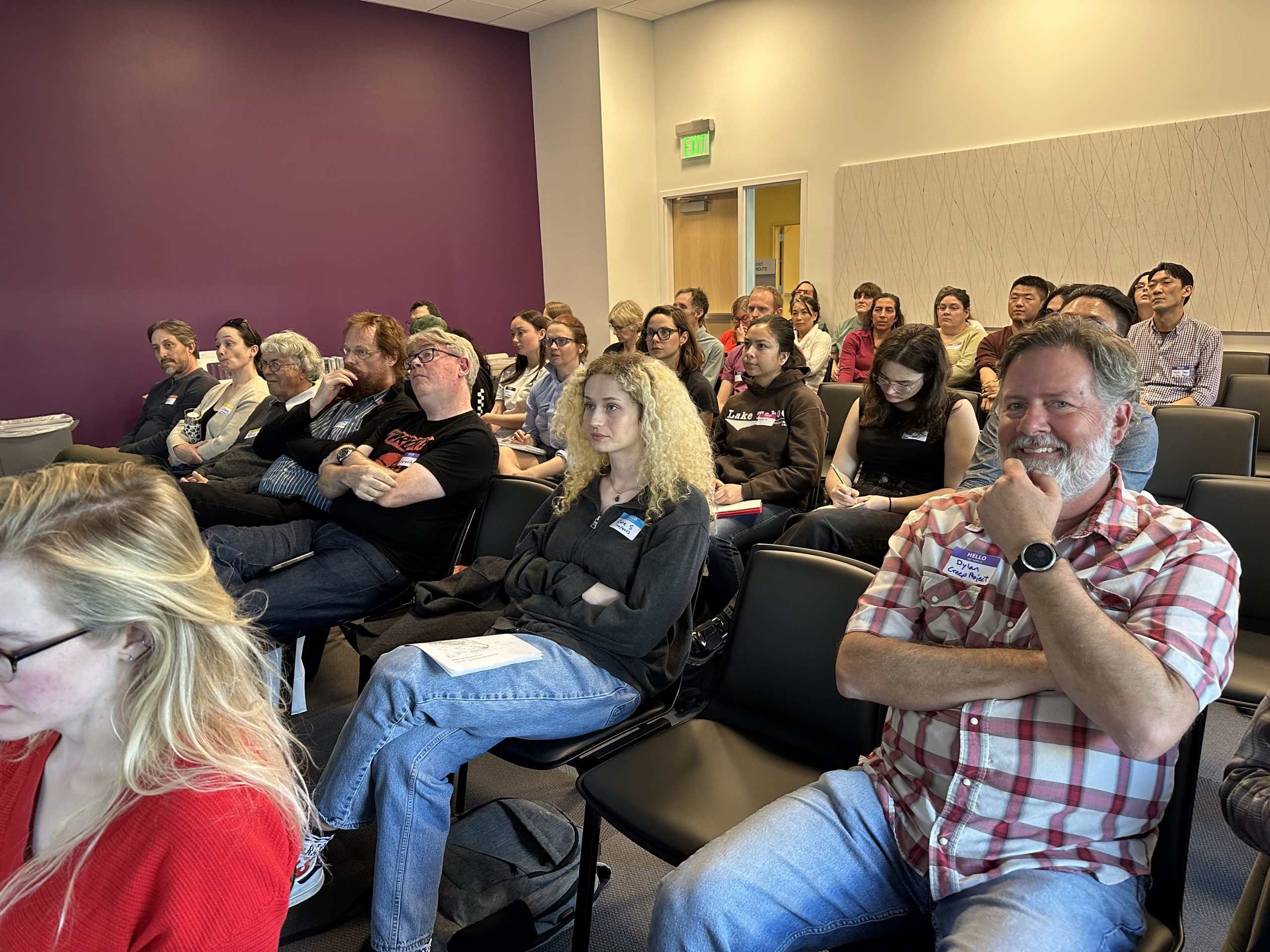
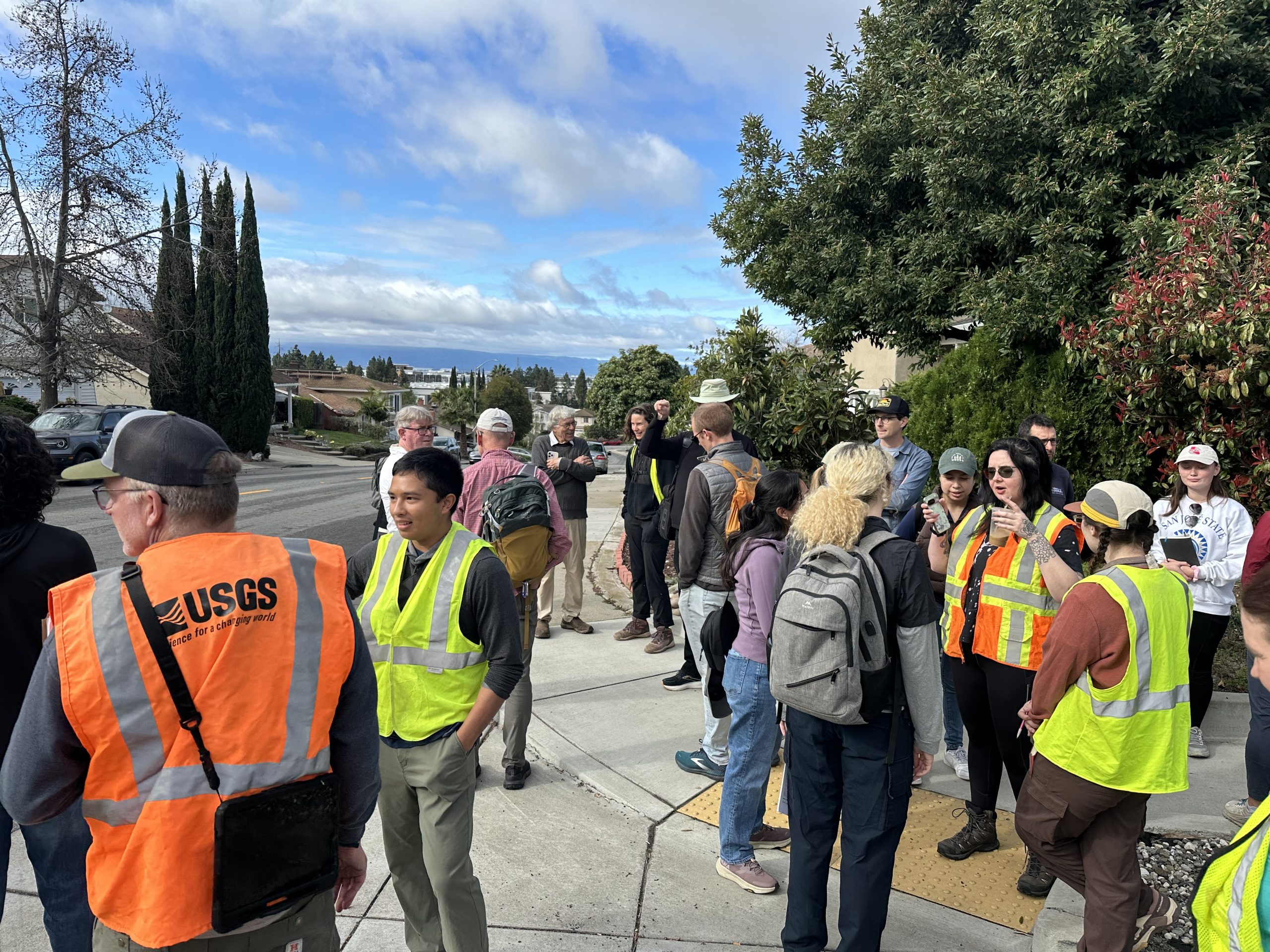
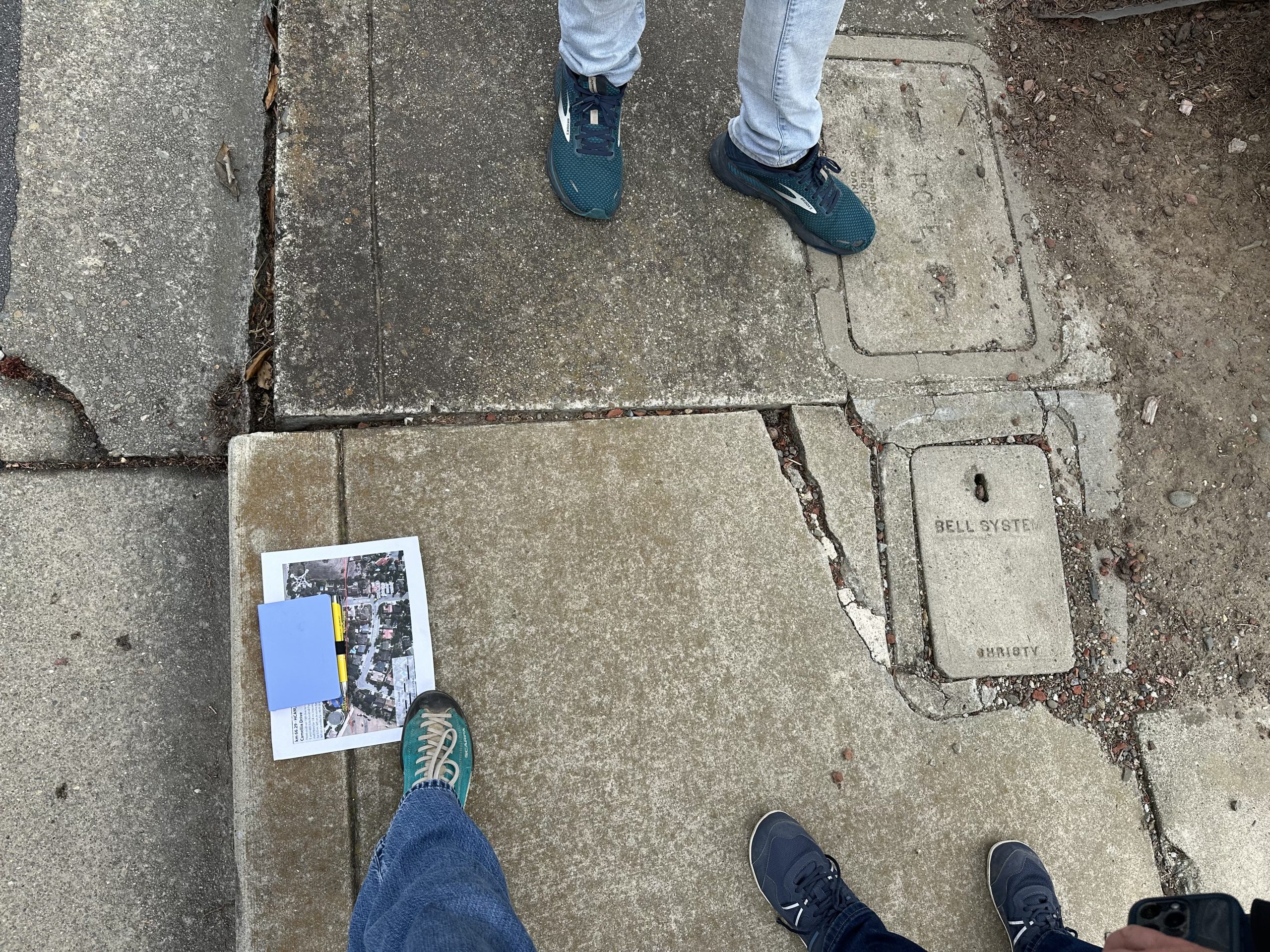
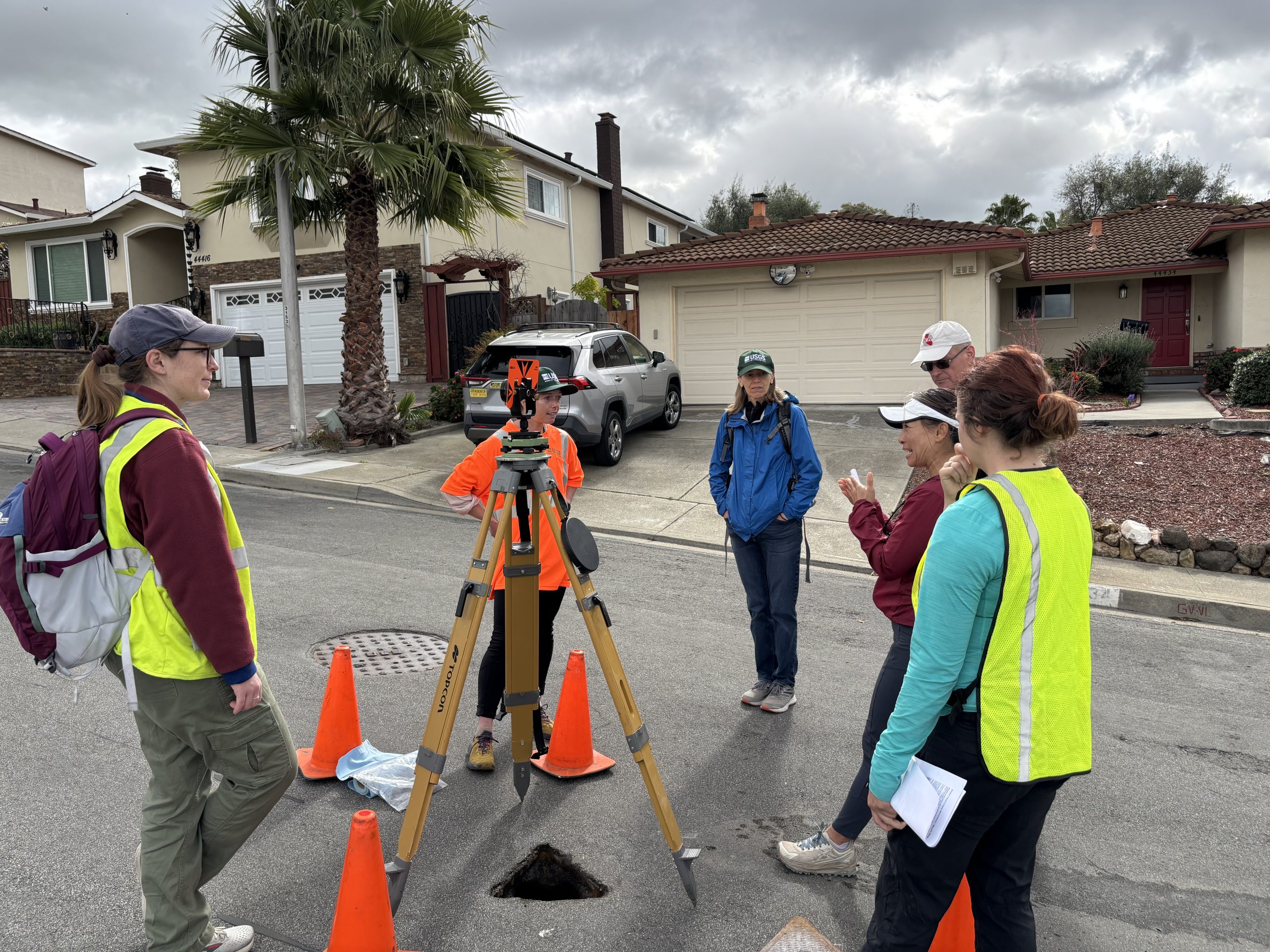
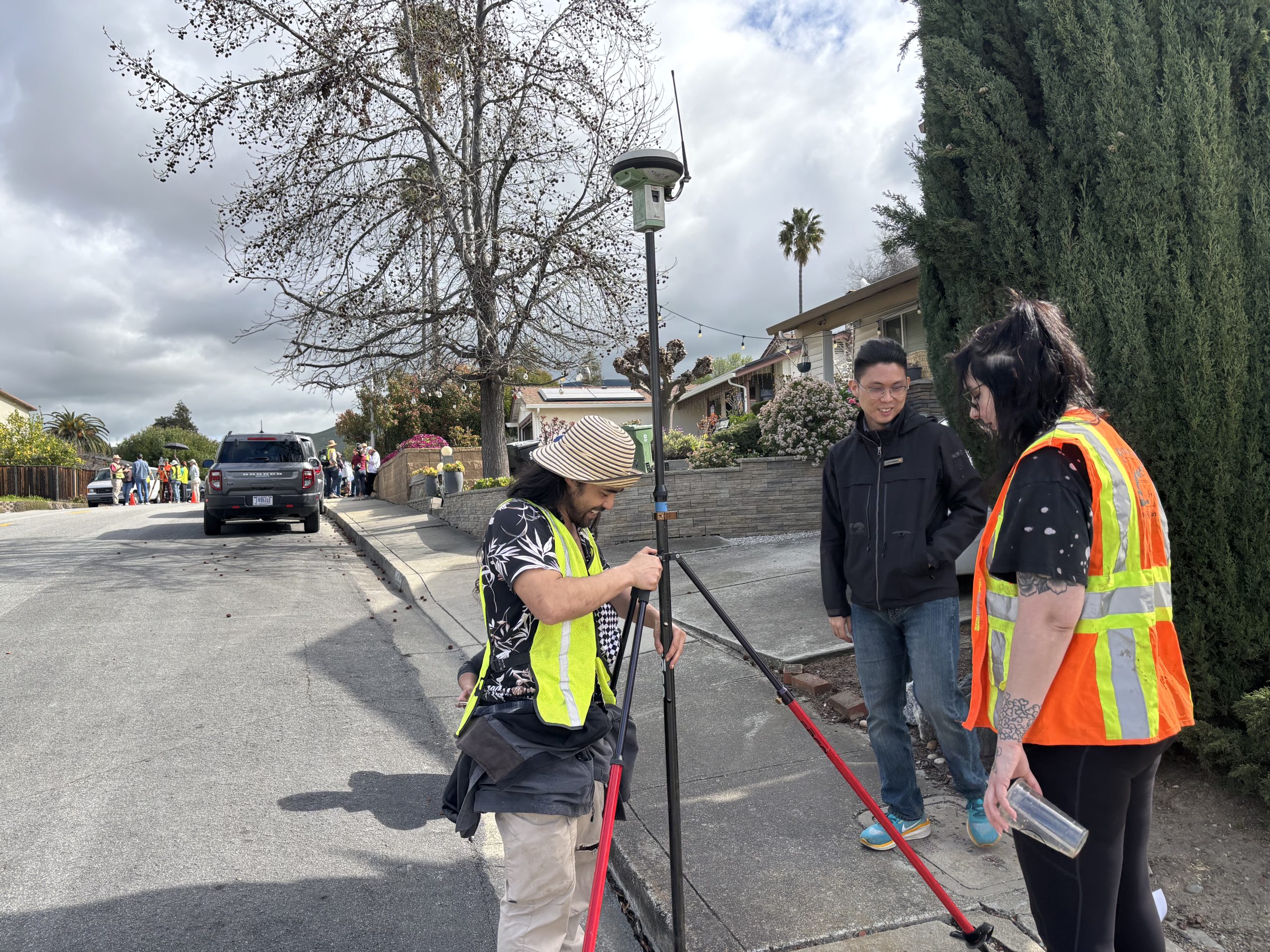
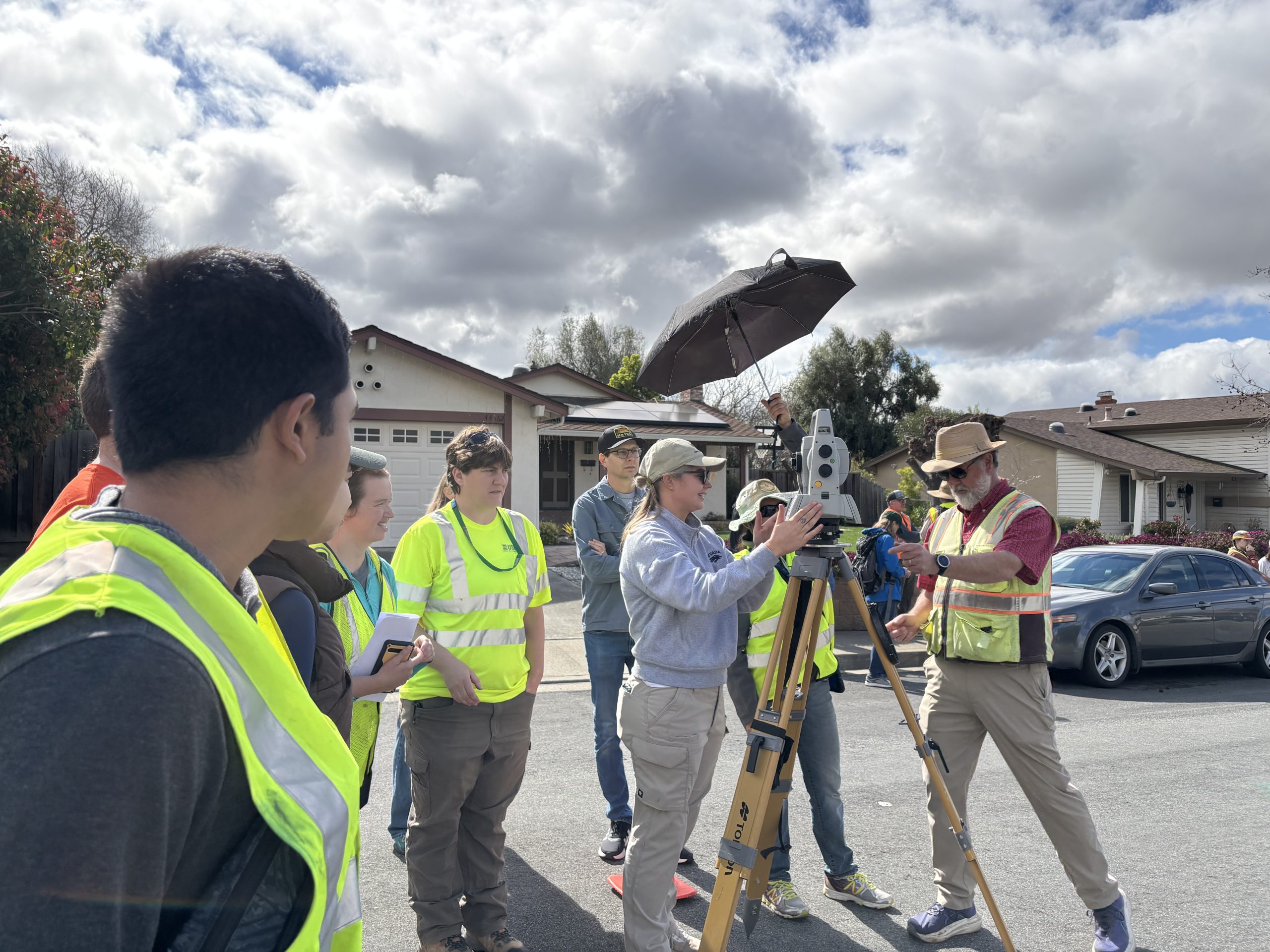
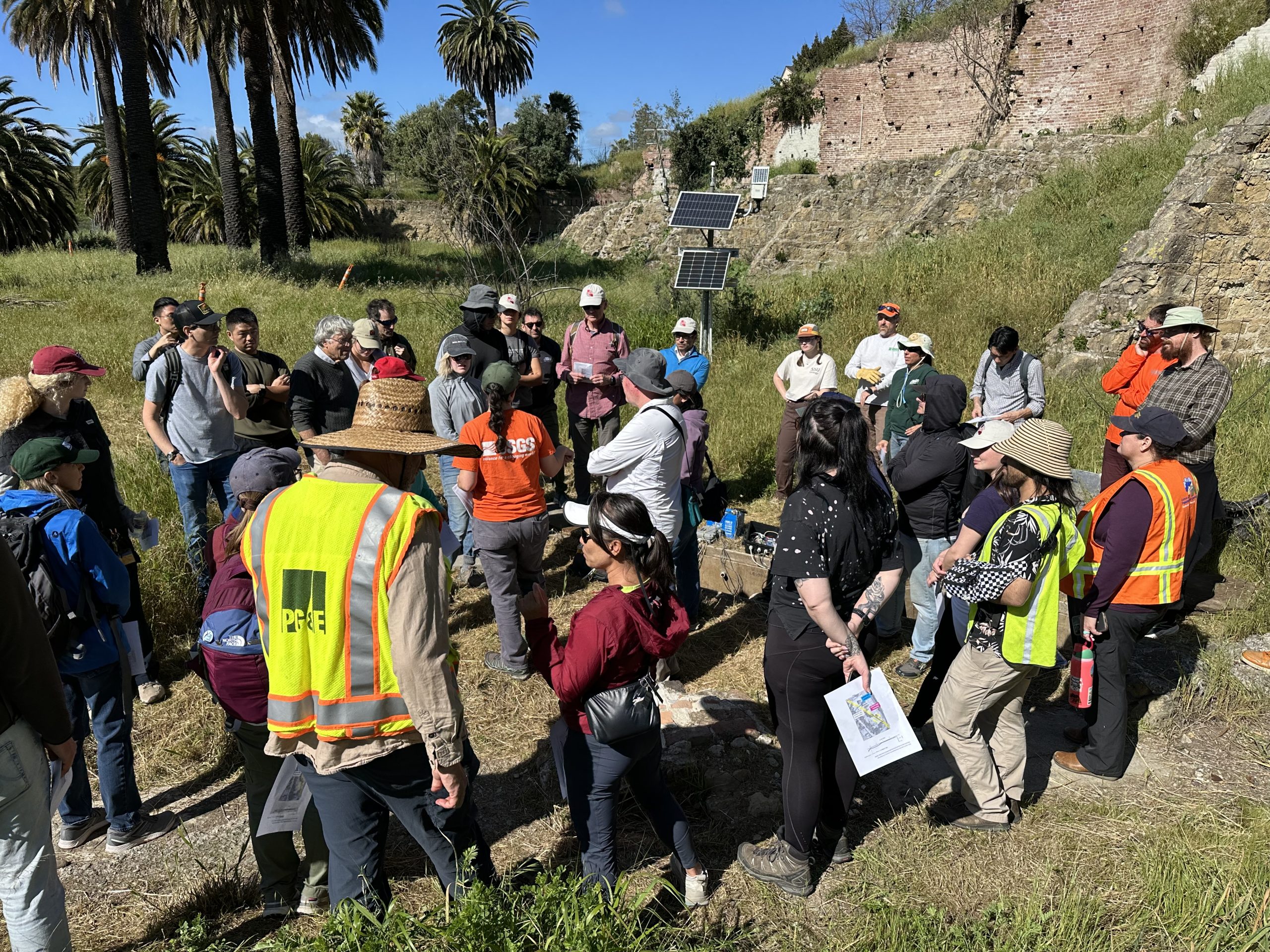
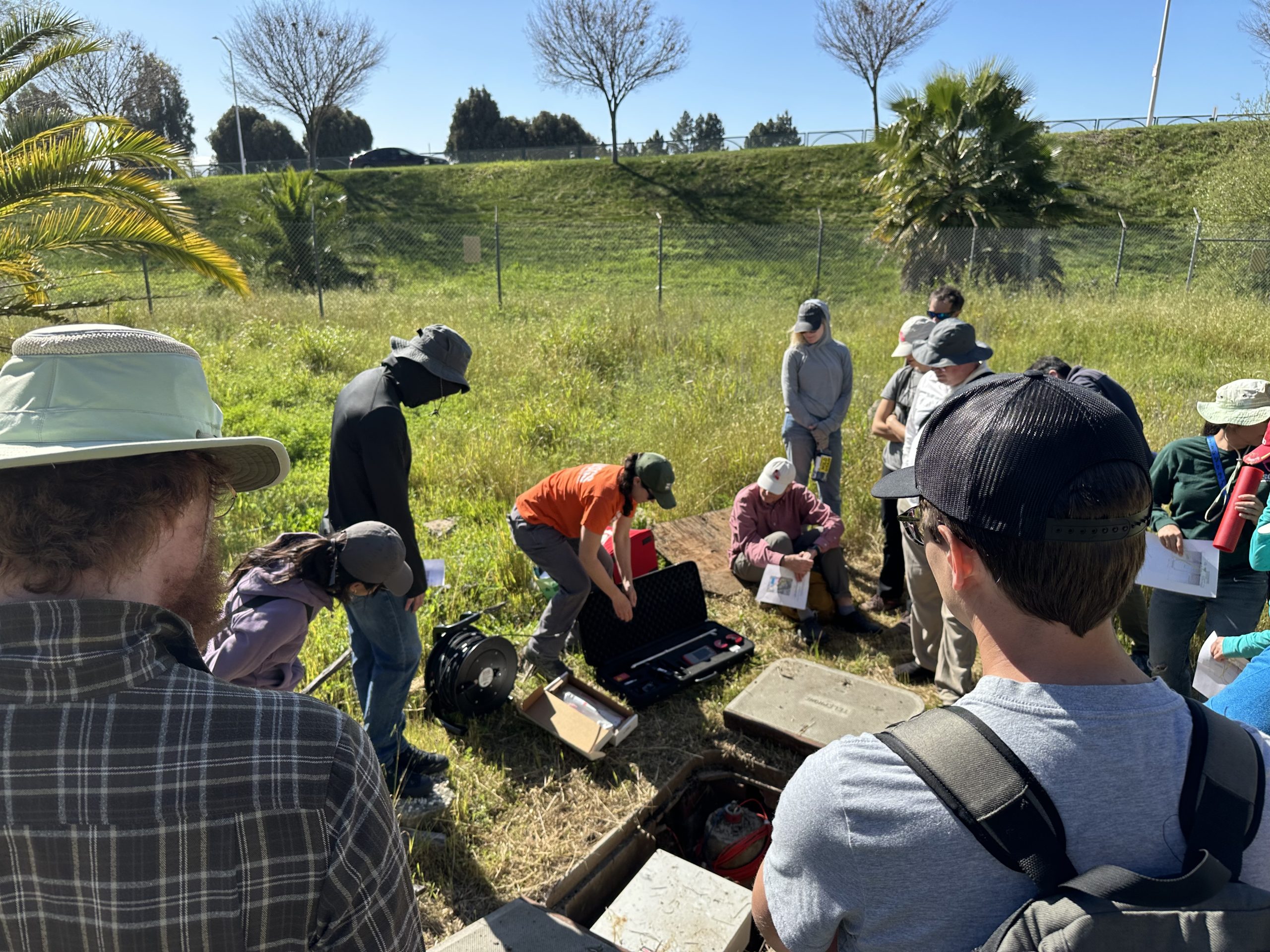
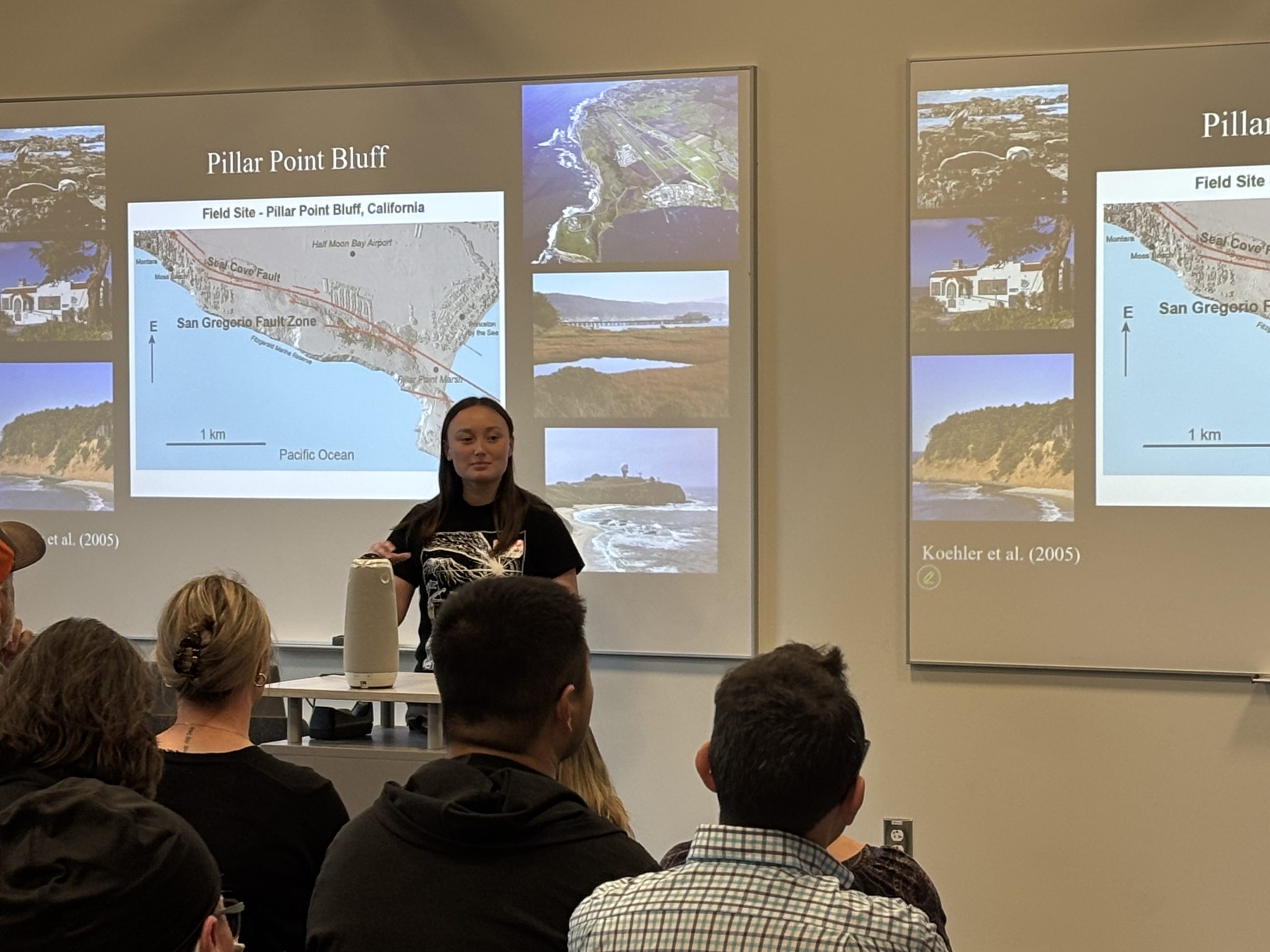
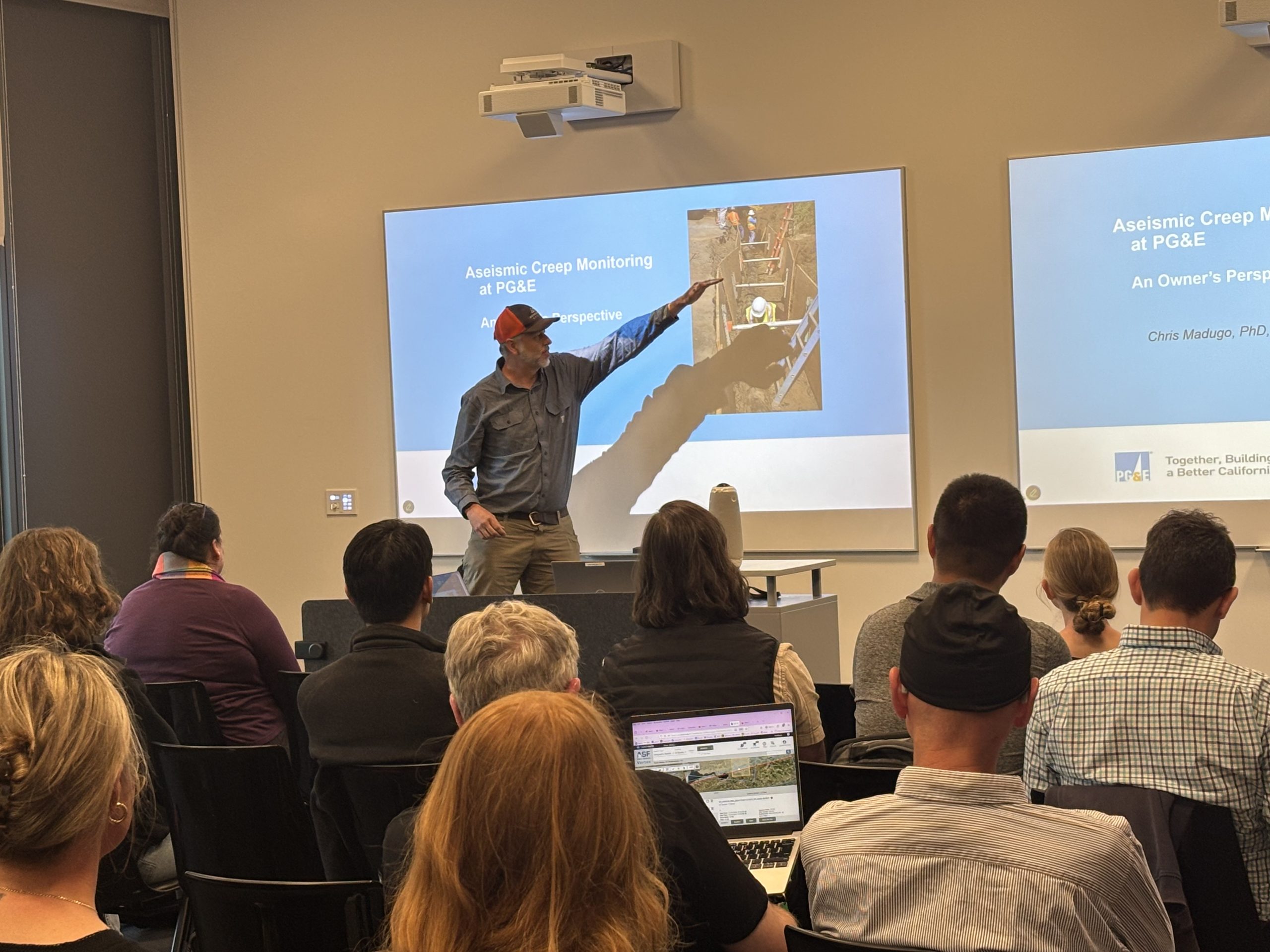
The Fault Creep Workshop combined scientific presentations with a full-day field excursion and a concluding community workplan and white paper writing session. This intentional format enabled participants to compare fault creep monitoring methods in the field before developing shared priorities for future monitoring, data stewardship, and collaborative research. SEE PHOTOS
The workshop produced several important scientific and community outcomes that will guide future research on fault creep and its role in earthquake mechanics and seismic hazard. Highlights are summarized below, with additional detail available in the workshop report.
Madden, E. H., & Rowe, C. D. (2026). 2026 Fault creep rates in the San Francisco Bay Area Workshop Report: Statewide California Earthquake Center. SCEC Contribution 15186
Presentation materials may be viewed by clicking the links below. PLEASE NOTE: Files are the author’s property. They may contain unpublished or preliminary information and should only be used for reviewing the talk. Only the presentations for which SCEC has received permission to post publicly are included below.
All times are Pacific Standard Time (UTC-8).
| Time | Description | Presenter |
|---|---|---|
Session 1: Creep and creep measurements | ||
| 12:30 - 13:00 |
| Christie Rowe / Ahmed Elbanna |
| 13:00 - 13:20 |
| F. McFarland |
| 13:20 - 13:40 |
| Stephen DeLong |
| 13:40 - 14:00 |
| Todd Ericksen |
| 14:00 - 14:20 |
| Roger Bilham |
| 14:20 - 14:40 |
| Josie Nevitt |
| 14:40 - 15:00 |
| Kaj Johnson |
| 15:00 - 16:15 | Breakout 1
| |
| 16:15 - 16:45 | Stephen DeLong / Josie Nevitt / Todd Ericksen / Roger Bilham | |
| 16:45 | Adjourn Day 1 |
| Time | Description | Presenter |
|---|---|---|
Session 2: Measuring Creep in the Field | ||
| 08:30 | Meet for all day field trip | |
| Sites 1 and 2 | Stephen DeLong | |
| Site 3 | Josie Nevitt / Roger Bilham / Todd Ericksen | |
| 18:00 | Workshop Dinner (San José) |
| Time | Description | Presenter |
|---|---|---|
Session 3: Deep dive on comparison of alignment arrays and other monitoring methods | ||
| 09:00 - 09:30 |
| Stephen DeLong / Josie Nevitt |
| 09:30 - 09:45 |
| Roland Burgmann |
| 09:45 - 10:00 |
| Chelsea Scott |
| 10:00 - 10:15 |
| Heather Crume |
| 10:15 - 10:30 |
| Thomas Luckie |
| 10:30 - 10:45 |
| Belle Philibosian |
| 10:45 - 11:00 |
| |
| 11:00 - 11:15 |
| Andrew Barbour |
| 11:15 - 11:30 |
| Eric Fielding |
| 11:30 - 11:45 |
| Jessica Murray |
| 11:45 - 12:00 |
| Gareth Funning |
| 12:00 - 12:15 |
| Katherine Guns |
| 12:15 - 13:15 | Lunch | |
| 13:15 - 14:23 | Thunder talks: 4 minute presentations. No "Minson" words! Pop up where you are sitting and share your work. | |
| 13:15 |
| Kim Blisniuk |
| 13:19 |
| Ashley Walsh |
| 13:23 |
| Karen Castaneda |
| 13:27 |
| Hannah Martin |
| 13:31 |
| Danielle Madugo |
| 13:35 |
| Evan Agbayani |
| 13:39 |
| Christopher Madugo |
| 13:43 |
| Catherine Hanagan |
| 13:47 |
| Rezagene Milani |
| 13:51 |
| Jaeseok Lee |
| 13:55 |
| Taka'aki Taira |
| 13:59 |
| Cate Sloat |
| 14:03 |
| Solène Antoine |
| 14:07 |
| Hiroki Sone |
| 14:11 |
| Junle Jiang |
| 14:15 |
| Travis Alongi |
| 14:19 - 14:40 | Break | |
| 14:40 - 15:10 | Breakout 2
| |
| 15:10 - 15:40 | Reconvene in larger group to share reflections and meet objectives. | |
Session 4: Planning for the future of creep monitoring | ||
| 15:40 - 15:55 |
| Mike Floyd & Katia Tymofyeyeva |
| 15:55 - 16:10 |
| Curtis Baden |
| 16:10 - 16:25 |
| Ruth Harris |
| 16:25 - 16:40 | Break | |
| 16:40 - 17:10 | Breakout 3
| |
| 17:10 - 17:40 | Reconvene in larger group to share reflections and meet objectives. | |
| 17:40 | End |
| Time | Description |
|---|---|
| 08:30 - 12:00 | Session 5: Workplan writing |
| 08:30 - 09:00 |
|
| 09:00 - 09:30 |
|
| 09:30 - 10:00 |
|
| 10:00 - 10:20 | Break |
| 10:20 - 11:00 |
|
| 11:00 - 11:40 |
|
| 11:40 - 12:00 |
|
The workshop brought together 58 scientists from universities, federal and state agencies, national laboratories, and industry representing a broad range of expertise in fault creep observations, geodesy, remote sensing, laboratory rock mechanics, earthquake physics, seismic hazard, and numerical modeling. Participants included researchers working with long-term alignment arrays, creepmeters, GNSS, InSAR, lidar, photogrammetry, coda wave interferometry, and other emerging techniques for monitoring active fault deformation. The workshop also welcomed graduate students, postdoctoral researchers, early-career scientists, and established investigators, fostering collaboration across career stages and scientific disciplines.
* Remote Participant
| Last Name | First Name | Organization |
|---|---|---|
| Agbayani | Evan | University of California Berkeley |
| Alongi | Travis | USGS Earthquake Science Center |
| Antoine | Solene | Caltech |
| Baden | Curtis | USGS |
| * Barbour | Andrew | USGS Earthquake Science Center |
| Bilham | Roger | University of Colorado |
| Blisniuk | Kimberly | SJSU |
| Botell | Brittany | University of Memphis |
| Brodsky | Emily | UCSC |
| Burgmann | Roland | UC Berkeley |
| Cardiff | Dylan | |
| Castaneda | Karen | San Jose State University |
| Contreras | Norma | University of California, Riverside |
| Crume | Heather | Moody's |
| DeLong | Stephen | USGS |
| Elbanna | Ahmed | USC/SCEC |
| * Elliott | Austin | U.S. Geological Survey |
| Ericksen | Todd | USGS |
| Fielding | Eric | Jet Propulsion Laboratory, Caltech |
| Floyd | Michael | Massachusetts Institute of Technology |
| Funning | Gareth | University of California, Riverside |
| Givler | Robert | Lettis Consultants International, Inc. |
| Guns | Katherine | USGS |
| Hanagan | Catherine (Cassie) | USGS Earthquake Science Center |
| Harris | Ruth | USGS |
| * Hough | Susan | U.S. Geological Survey |
| Hearn | Liz | USGS |
| * Johnson | Kaj | Indiana University |
| Jiang | Junle | The University of Oklahoma |
| * Lindsay | Danielle | GNS Science |
| * Lozos | Julian | California State University, Northridge |
| Jones | Angelika | San José State University |
| Lee | Jaeseok | Brown University |
| Luckie | Thomas | Sandia National Labs |
| Madden | Betsy | San José State University |
| Madugo | Christopher | PG&E |
| Madugo | Danielle | California Geological Survey (CGS) |
| Martin | Hannah | Nevada Seismological Laboratory, UNR |
| * Materna | Kathyrn | UC Boulder |
| Mendoza | Matt | U.S. Bureau of Reclamation |
| Milani | Rezagene | USGS & San Jose State University |
| * Milliner | Chris | Caltech |
| * Minson | Sarah | USGS |
| Murray | Jessica | USGS Earthquake Science Center |
| Nevitt | Josie | USGS |
| Philibosian | Belle | USGS Earthquake Science Center |
| Pollitz | Fred | USGS |
| Prush | Veronica | New Mexico Institute of Mining and Technology |
| Rosa | Carla | California Geological Survey (CGS) |
| Rowe | Christie | Nevada Seismological Laboratory |
| Savage | Heather | UCSC |
| Scott | Chelsea | Arizona State University |
| Sloat | Cate | San Jose State University |
| Sone | Hiroki | University of Wisconsin-Madison |
| Taira | Taka'aki | University of California, Berkeley |
| Vermeer | Jessie | USGS |
| Walsh | Ashley | San Jose State University |
| * Yoon | Clara | USGS |
Workshop participation was limited to approximately 50 participants to foster active discussion and collaboration among researchers representing academia, government, and industry with expertise in fault creep observations, monitoring technologies, geodesy, earthquake physics, and seismic hazard.
The workshop registration fee was $150, which covered meals during the workshop and transportation and meals for the included March 4 field trip. Participants were responsible for transportation to and from San José, parking, and meals not included in the workshop program.
Travel support was available to help offset registration, lodging, and travel expenses associated with attending the workshop. Lodging was arranged for supported out-of-town participants at the Signia Hotel adjacent to San José State University. Students, early-career researchers, and participants without institutional funding were especially encouraged to request support as part of the application process. SCEC provided travel support to 28 workshop participants.
The Statewide California Earthquake Center (SCEC) fosters a diverse and inclusive community where everyone feels safe, productive, and welcome. We expect all participants in SCEC-supported events to uphold this commitment by adhering to the SCEC Activities Code of Conduct.
The SCEC Annual Meeting brings together 400-500 participants worldwide to share breakthroughs, assess progress, and chart a collaborative path for earthquake science. All of the Center activities are presented, analyzed, and woven into a set of priorities for SCEC to pursue in the future.