Modeling the Earthquake Cycle from Faults to Supercomputers
Date: June 22-24, 2026
Location: Scripps Institution of Oceanography, UC San Diego, La Jolla, CA
Workshop Organizers: Bar Oryan, Alice-Agnes Gabriel, Dave May, Jeena Yun, Yohai Magen
SCEC Award: 26020
Advances in geodetic, seismic, and geological observations now capture fault slip in far greater detail than was possible only a couple of decades ago, from slow transient deformation to fluid-driven processes and fault zone complexity. Yet the observational record remains incomplete, and observations alone cannot explain the physical processes that govern the seismic cycle. Physics-based models of Sequences of Earthquakes and Aseismic Slip (SEAS) bridge this gap, and next-generation SEAS models can now incorporate the realistic fault geometries, heterogeneous crust, and realistic tectonic loading that observations reveal. These simulations, however, are technically demanding, and many early-career scientists lack opportunities to develop the numerical modeling and high-performance computing (HPC) skills they require. The 2026 SCEC Tandem Training Workshop brought together 39 participants, primarily graduate students, postdoctoral researchers, and early-career scientists, from 22 institutions in 8 countries for an intensive 2.5-day, science-driven, hands-on workshop at the Scripps Institution of Oceanography, UC San Diego. Invited talks by Brittany Erickson (University of Oregon), Pierre Romanet (CEREMA/GéoAzur, France), So Ozawa (ERI, University of Tokyo, Japan), and Tom Heaton (Caltech), together with six participant science talks and two poster sessions, connected the training part to the scientific frontiers of earthquake-cycle research. Guided hands-on sessions then trained participants to design, mesh, launch, visualize, and interpret SEAS simulations with Tandem, an open-source HPC code (Uphoff et al., 2023; Gabriel et al., 2026). To make this possible for users at every level, the organizing team built a dedicated computational ecosystem, including HPC access via the Quakeworx Science Gateway, a pre-configured JupyterLab image on the National Data Platform (NPD), and a portable Docker environment, all of which, together with the complete training materials, remain openly available to participants after the workshop. Feedback was strongly positive: the 23 survey responses rated the workshop 4.7/5 for overall value, format, and logistics, and identified the hands-on exercises as the most valuable element.
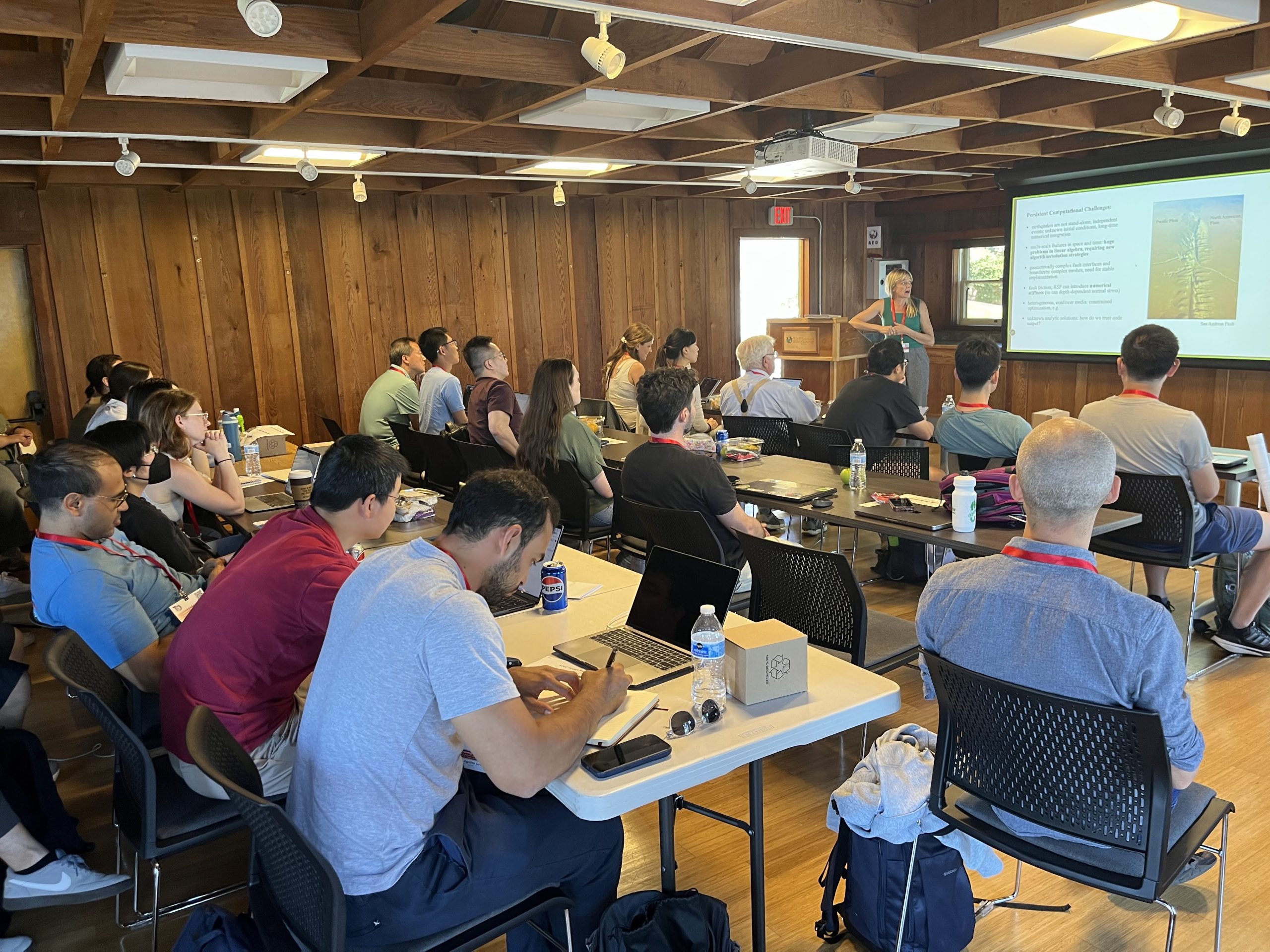
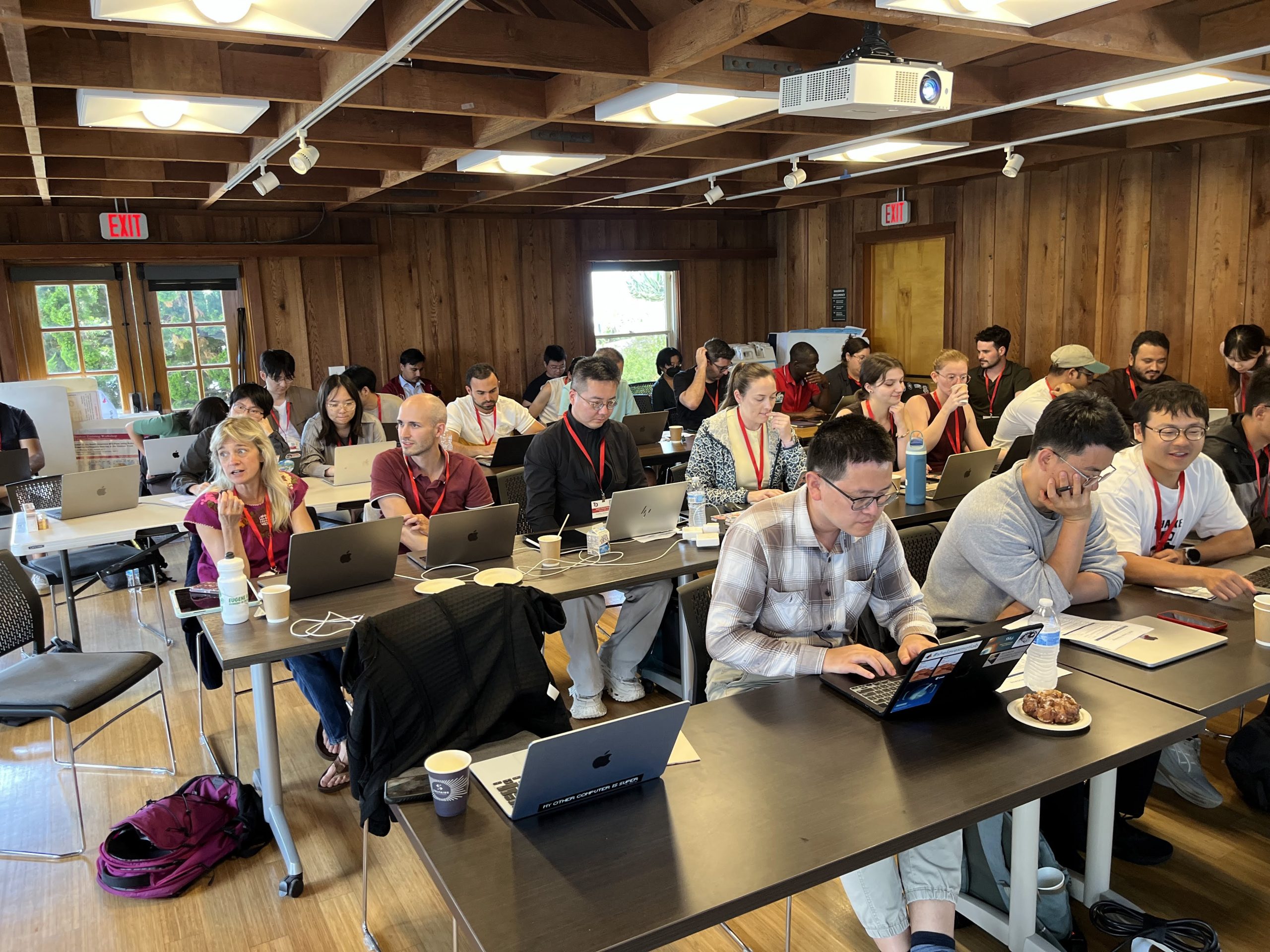
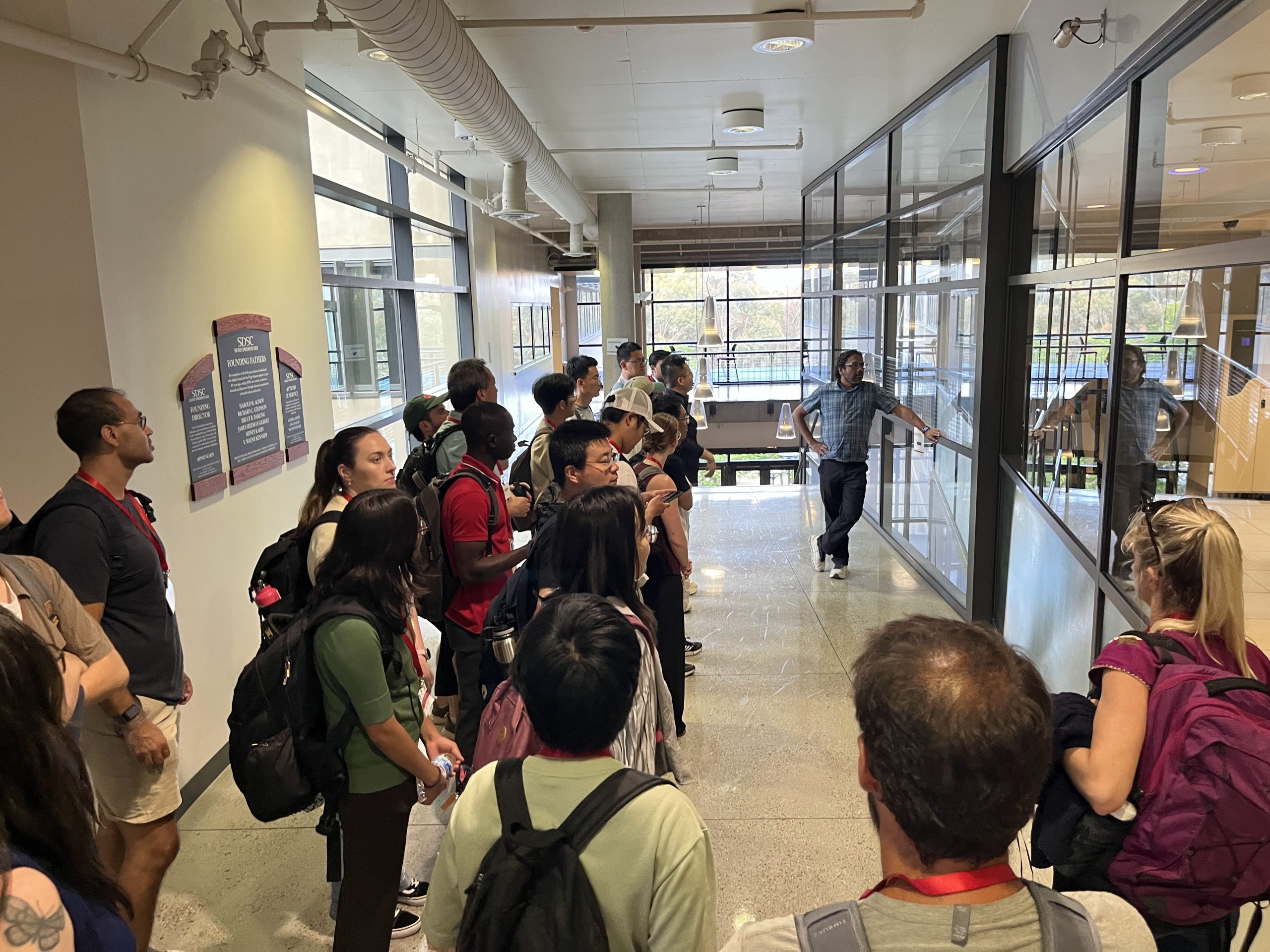
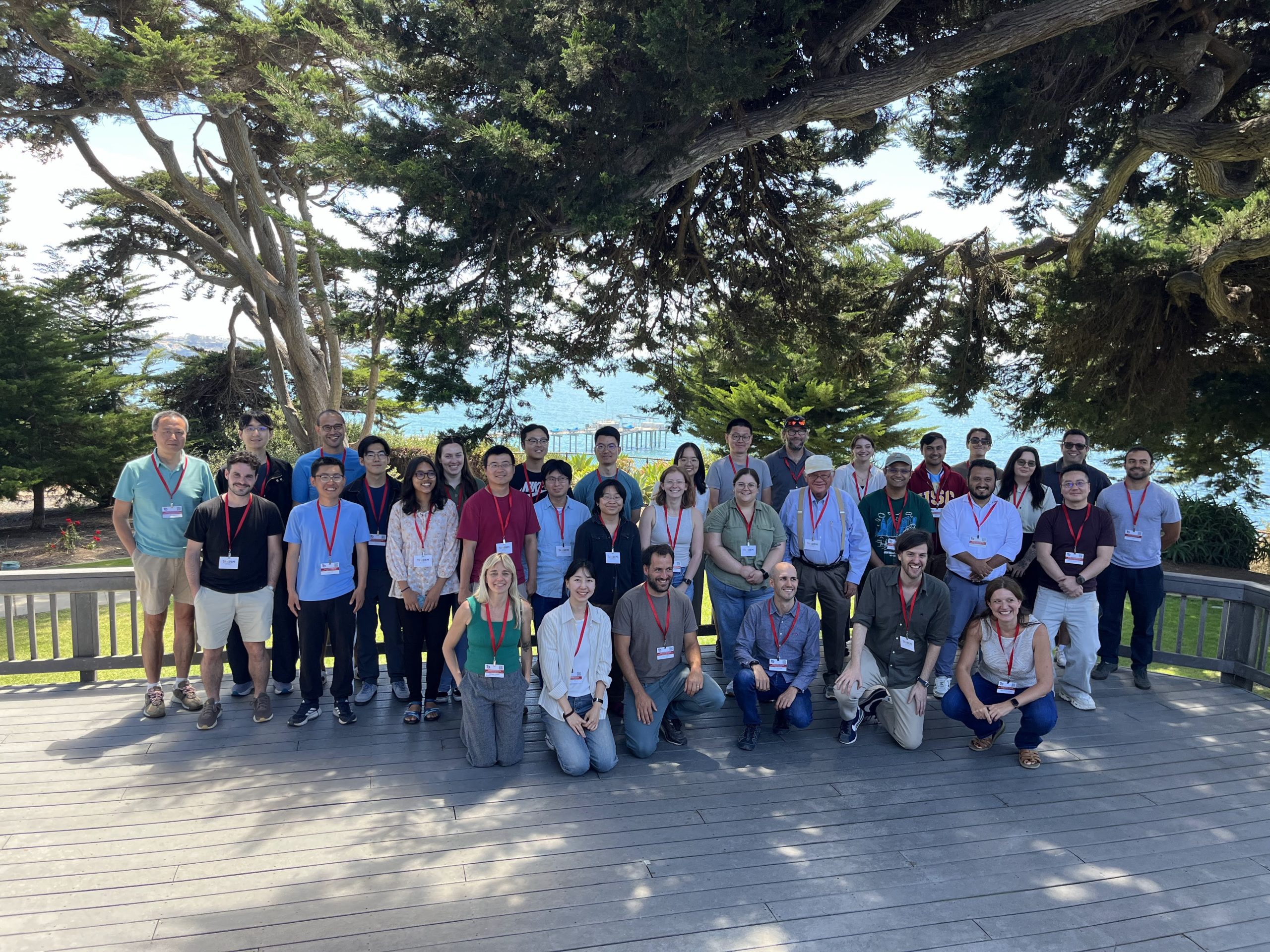
Participants rated the SCEC Tandem Training Workshop 4.7/5 for overall engagement, educational value, format, and organization, and 4.8/5 for the computational resources supporting the hands-on training. Hands-on exercises were identified as the workshop’s most valuable component, and participants reported increased confidence using Tandem and applying it to their own earthquake-cycle research. SEE PHOTOS
The workshop produced several important educational, technical, and community outcomes that will strengthen the use of physics-based earthquake-cycle simulations globally. Highlights are summarized below, with additional detail available in the workshop report.
Oryan, B., Gabriel, A., Yun, J., Magen, Y., & May, D. A. (2026). 2026 Tandem Training Workshop Report: Statewide California Earthquake Center. SCEC Contribution 15182
Gabriel, A.-A., Karki, P., Magen, Y., Oryan, B., Ulrich, T., Yun, J., May, D.A. (2026). Tandem: An Open‐Source High‐Performance Computing Volumetric Software Package to Model Sequences of Earthquakes and Aseismic Slip Across Complex Fault Systems. Seismological Research Letters. SCEC Contribution 15181
Uphoff, C., May, D. A., & Gabriel, A.-A. (2023). A discontinuous Galerkin method for sequences of earthquakes and aseismic slip on multiple faults using unstructured curvilinear grids. Geophysical Journal International, 233(1), 586–626. SCEC Contribution 14131
Presentation materials may be viewed by clicking the links below. PLEASE NOTE: Files are the author’s property. They may contain unpublished or preliminary information and should only be used for reviewing the talk. Only the presentations for which SCEC has received permission to post publicly are included below.
All times are Pacific Daylight Time (UTC-7).
| Time | Agenda Item | Speaker |
|---|---|---|
| 12:30 - 13:30 | Optional arrival window with boxed lunch and registration materials | |
| 13:30 - 13:40 | Introduction | Bar Oryan |
| 13:40 - 14:05 | Incorporating Complex Physics and Geometries in SEAS Modeling: Numerical Challenges and Discoveries | Brittany Erickson |
| 14:05 - 14:30 | A perspective on the theory and simulation of non-planar fault networks (PDF) | Pierre Romanet |
| 14:30 - 15:00 | Coffee break | |
| 15:00 - 15:25 | Role of fluids and faults’ geometrical complexity in the earthquake cycle | So Ozawa |
| 15:25 - 15:50 | Slip pulses are chaotic and they cause fractal prestress (PDF) | Tom Heaton |
| 16:00 - 17:20 | Poster session | |
| 17:30 | Last shuttle to UCSD main campus | |
| 19:00 - 19:45 | Dinner at dining hall |
| Time | Agenda Item | Speaker |
|---|---|---|
| 07:15 - 08:00 | Breakfast at dining hall | |
| 08:30 - 09:00 | Tandem introduction (PDF) | Alice Gabriel |
| 09:00 - 10:15 | Session A: Preparing Tandem input files and launching simulations (PDF) | Yohai Magen |
| 10:15 - 10:30 | 3D frictional and viscous earthquake sequence modeling in Cascadia subduction zone | Wenqiang Zhang |
| 10:30 - 11:00 | Coffee break | |
| 11:00 - 12:15 | Session B: Postprocessing and visualizing Tandem simulations | Jeena Yun |
| 12:15 - 13:15 | Lunch | |
| 13:15 - 13:30 | Earthquake modelling in coupled poroelastic and elastic media (PDF) | Federico Bucher |
| 13:30 - 13:45 | Linking Paleoseismic Trench Observations to Earthquake Source Characteristics via Distinct Element Method Models | Kristen Chiama |
| 13:45 - 14:45 | Individual Tandem model development with support (and coffee) | |
| 15:00 - 17:00 | Tour of the San Diego Supercomputer Center (take the 15:00 shuttle to UCSD main campus) | |
| 19:00 - 19:45 | Dinner at dining hall |
| Time | Agenda Item | Speaker |
|---|---|---|
| 07:15 - 08:00 | Breakfast at dining hall | |
| 08:30 - 09:45 | Session C: Generating meshes for Tandem with Gmsh | Bar Oryan |
| 09:45 - 11:00 | Poster session (with coffee) | |
| 11:15 - 11:30 | Multi-scale Modeling of Fault Zones with High Resolution Physics | Mohamed Abdelmeguid |
| 11:30 - 11:45 | FASTDASH: an implementation of 3-D earthquake cycle simulation on complex fault systems using the boundary element method accelerated by H-matrices (PDF) | Jinhui Cheng |
| 11:45 - 12:45 | Lunch | |
| 12:45 - 13:45 | Session D: Running and compiling Tandem on HPC: Quakeworx and external clusters | Jeena Yun and Bar Oryan |
| 13:45 - 14:00 | Pore Pressure Perturbations on Rough Fault Earthquake Cycle Simulations (PDF) | Leonardo Aguilar Suarez |
| 14:00 - 14:30 | Coffee break | |
| 14:30 - 15:45 | Individual Tandem model development with support | |
| 15:45 - 16:00 | Concluding remarks | Bar Oryan |
| 16:30 - 18:30 | Optional end-of-workshop bites at Shore Rider | |
| 19:00 - 19:45 | Dinner at dining hall |
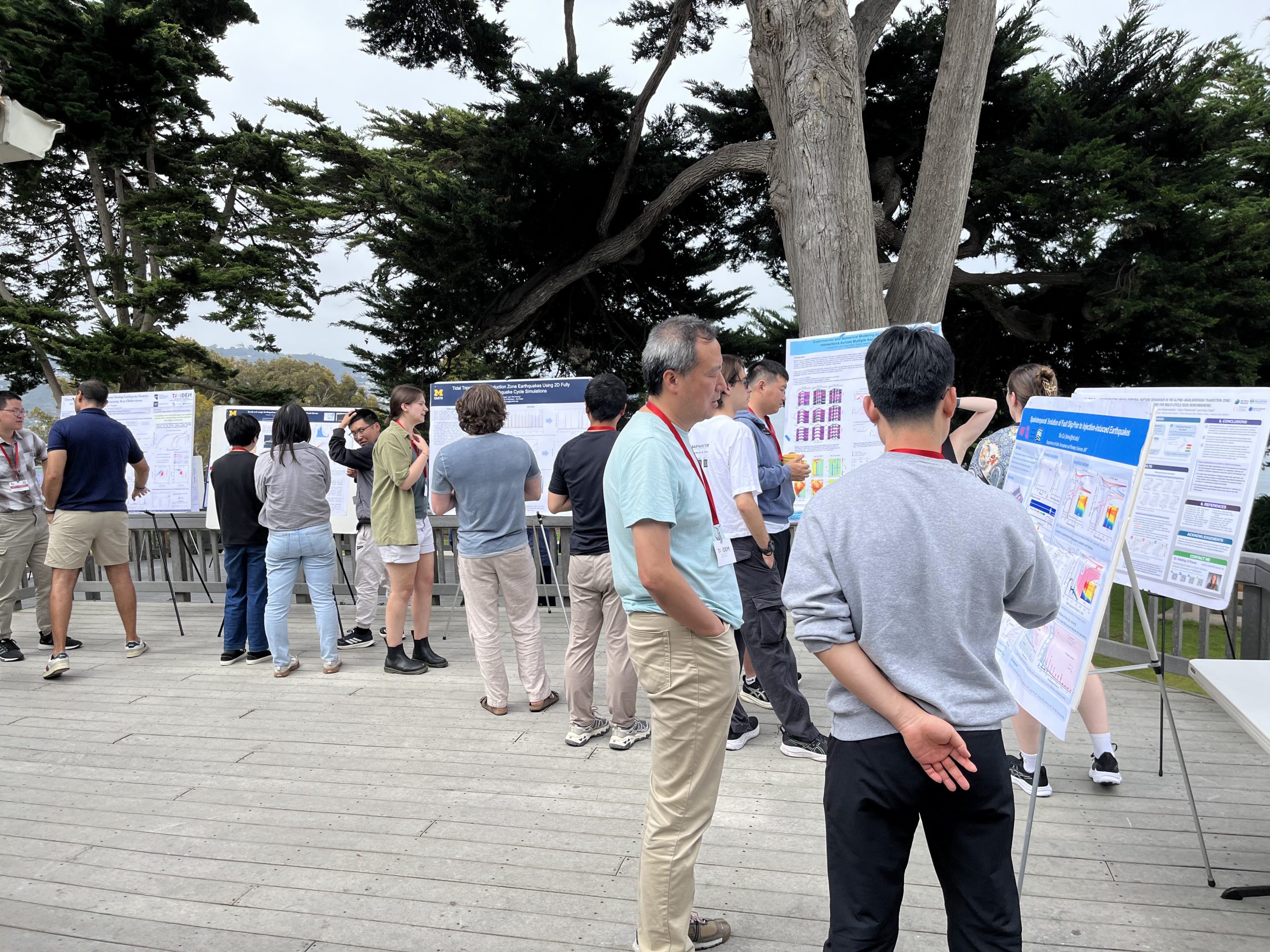
The workshop featured 22 poster presentations that provided early-career participants with an opportunity to present their research, connect the hands-on training to a broad range of scientific applications, and foster collaboration within the emerging Tandem user community. Post-workshop surveys also identified the poster sessions as a valuable component of the training experience, contributing to participant learning alongside the hands-on exercises, participant talks, and invited presentations.
| # | Last Name | First Name | Poster Title |
|---|---|---|---|
| 1 | Vogel | Em | Evaluating Tidal Triggering of Subduction Zone Earthquakes Using 2D Earthquake Cycle Simulations |
| 3 | Zhai | Peng | Small and large earthquakes arising from weak fault zone deformation |
| 4 | Custard | Alaura | Using Episodic Tremor and Slip to Characterize Segmentation Boundaries in Cascadia |
| 5 | Tan | Morow | Triggered Aseismic Creep Following the 2023 Ocotillo Swarm Constrained by 3D InSAR Observations |
| 6 | Cui | Xin | Spatiotemporal evolution of fault slip before induced earthquakes |
| 7 | Tang | Yuxiang (Gideon) | Probabilistic Faudi Displacement Hazard Analysis for the Willunga Fault in Australia |
| 8 | Agboola | Kayode | Arc-Scale Imaging of the Cascade Volcanoes Using Ambient Noise Imaging Technique |
| 9 | Botell | Brittany | Comprehensive Benchmarking and Comparison of Dynamic Rupture Codes DRDG3D and Faultmod |
| 10 | Jaman | Md Hasnat | GNSS Constraints on Deformation and Seismic Hazard Along the Dauki Fault, Bangladesh |
| 11 | Jiang | Yu | Characterizing Aseismic Stress Transients During Earthquake Swarms in California and Nevada From Seismicity Rate Observations |
| 12 | K C | Sajan | Earthquake Ground Motion Simulation Validation in California and their Engineering Relevance |
| 13 | Li | Linxuan | Ubiquitous Interactions and Subcritical Patches Explain the Irregularity of Repeating Earthquakes |
| 15 | Melhorato | Rodrigo | Long-term modelling of earthquake swarms in shallow crust in the South American Intraplate |
| 16 | Mishra | Eshanta | InSAR-Based Monitoring of Slow Slip Events in the Cascadia Subduction Zone |
| 17 | O'Kane | Aisling | Constraining historical earthquake sequences in the New Zealand transition zone using paleoseismic records and ground motion modelling |
| 18 | Odhiambo | Caroline | Earthquake Cycle Dynamics and the Response of Engineered Structures in the East African Rift System |
| 19 | Salinas | Matthew | Compton blind thrust fault paleoseismology - Connecting compressional structures in the LA metropolitan area |
| 20 | Shi | Qian | Flow2QuakeDFN: coupling quasi-dynamic ruptures with complicated pore pressure, poro-elastic and thermo-elastic stresses |
| 21 | Shrestha | Rajani | Earthquake recurrence intervals in numerical simulations on a planar, homogeneous fault |
| 22 | Sun | Yudong | Experimental and Numerical Modeling of Earthquake Rupture Interactions Across Multiple Asperities and Barriers |
| 2 | Haque | Dewan Mohammad Enamul | Unexpected Faulting in the Recent (2025–2026) Bangladesh Earthquake Sequence: New Structure or Megathrust Splay |
| 14 | Liu | Zhen | Unravelling Slow Earthquake Variability in Cascadia Margin |
The workshop brought together 39 participants (37 in person and 2 remote) from 22 institutions in 8 countries, primarily graduate students and postdoctoral researchers interested in earthquakes, slow slip events, the physics of seismic cycles, and SEAS simulations. Participants were selected from approximately 80 applicants based on their scientific motivation, the anticipated benefit to their research and career development, and their readiness to engage in the workshop’s computational training. Invited presentations by leading researchers, together with participant science talks and poster sessions, connected the hands-on training to the frontiers of earthquake-cycle research and provided opportunities for participants to engage directly with leaders in earthquake-cycle research.
Participants received lodging and meals throughout the workshop, with accommodations provided on the UC San Diego campus and shuttle transportation to the Scripps Institution of Oceanography each day. SCEC also provided additional travel support, including partial airfare assistance, to eligible participants. Online participation was available on the opening day for those unable to travel.
* Remote Participant
| Last Name | First Name | Organization |
|---|---|---|
| Abdelmeguid | Mohamed | California Institute of Technology |
| Agboola | Kayode | Cornell University |
| Aguilar Suarez | Leonardo | Stanford University |
| Bongoyo | Ally | University Of Dar Es Salaam |
| Botell | Brittany | University of Memphis |
| Bucher | Federico | Universidad Nacional de La Plata |
| Chai | Lin | University of Science and Technology of China |
| Cheng | Jinhui | California Institute of Technology |
| Chiama | Kristen | University of Southern California |
| Cui | Xin | Massachusetts Institute of Technology |
| Custard | Alaura | University of Kansas |
| Erickson | Britanny | University of Oregon |
| Gabriel | Alice-Agnes | University of California, San Diego |
| Haque | Dewan Mohammad Enamul | Louisiana State University |
| Jaman | Md Hasnat | Columbia University |
| Jiang | Yu | University of Nevada, Reno |
| K C | Sajan | University of Southern California |
| Kuncoro | Alvina | Institut Teknologi Bandung |
| Li | Linxuan | California Institute of Technology |
| Liu | Lei | University of Science and Technology of China |
| Liu | Zhen | JPL / California Institute of Technology |
| Magen | Yohai | University of California, San Diego |
| May | Dave | University of California, San Diego |
| Melhorato | Rodrigo | Instituto Militar de Engenharia |
| Mohanty | Aditya | CSIR - National Geophysical Research Institute |
| O'Kane | Aisling | Victoria University of Wellington |
| * Ojeda | Javier | Universidad de Concepción |
| Oryan | Bar | University of California, San Diego |
| Osumeje | Joseph | University of Michigan |
| Ozawa | So | Earthquake Research Institute, University of Tokyo |
| Palle | Jyothsna | CSIR - National Geophysical Research Institute |
| Rani | Priya | Indian Institute of Technology Kharagpur, India |
| * Rapaport Bruck | Eitan | University of California, San Diego |
| Romanet | Pierre | CEREMA/GéoAzur |
| Salinas | Matthew | University of Southern California |
| Sharma | Yogendra | National Cheng Kung University, Taiwan |
| Shi | Qian | California Institute of Technology |
| Shrestha | Rajani | California Institute of Technology |
| Sun | Yudong | Stanford University |
| Tan | Morow | University of Colorado Boulder |
| Tang | Yuxiang (Gideon) | The University of Melbourne |
| Tomar | Yashpal Singh | National Centre for Seismology |
| Vogel | Em | University of Michigan |
| Yun | Jeena | University of California, San Diego |
| Zhai | Peng | University of Michigan |
| Zhang | Wenqiang | Stanford University |
The Statewide California Earthquake Center (SCEC) fosters a diverse and inclusive community where everyone feels safe, productive, and welcome. We expect all participants in SCEC-supported events to uphold this commitment by adhering to the SCEC Activities Code of Conduct.
The SCEC Annual Meeting brings together 400-500 participants worldwide to share breakthroughs, assess progress, and chart a collaborative path for earthquake science. All of the Center activities are presented, analyzed, and woven into a set of priorities for SCEC to pursue in the future.