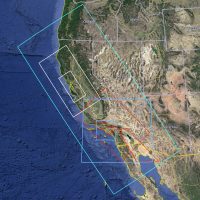
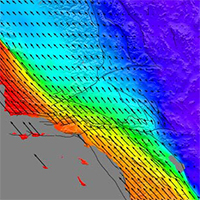
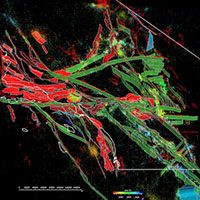
The SCEC Community Velocity Model (CVM) Technical Activity Group (TAG) Kickoff Workshop will convene the investigators and technical contributors leading the newly funded TAG to establish a coordinated roadmap for advancing the next generation of multi-scale seismic velocity models for California and western Nevada. Community velocity models are foundational infrastructure for earthquake science, providing the geologic framework needed for physics-based ground motion simulations, earthquake scenario development, seismic hazard assessment, and engineering applications. While numerous regional and local velocity models have been developed over the past decade, differences in methodology, resolution, validation, and geographic coverage have made it difficult to incorporate new models into a consistent community framework. The CVM TAG addresses this challenge by developing a transparent, scientifically rigorous process for validating, comparing, and integrating new velocity models, quantifying model uncertainty, and establishing a sustainable cyberinfrastructure that enables the Community Velocity Model to evolve as new datasets and methods become available.
The kickoff workshop is designed as a collaborative working meeting that will bring together the CVM TAG investigators and participants to define the technical priorities and implementation strategy for the project’s first year. Working sessions will focus on establishing common validation metrics, model-ingestion workflows, software and data infrastructure, uncertainty quantification, and coordination across complementary efforts in tomography, attenuation, and new velocity model development. Participants will also develop the project’s technical roadmap, identify responsibilities for the major work areas, and establish mechanisms for ongoing coordination throughout the first year. Although the workshop is intentionally structured as a focused working meeting, its outcomes—including documented workflows, community software, validation methodologies, and technical recommendations—are intended to provide lasting benefits to the broader earthquake science community by strengthening the long-term development and sustainability of the SCEC Community Velocity Model.
August 30, 2026
All times below Pacific Daylight Time (UTC-7)
Presentation materials may be viewed by clicking the links below. PLEASE NOTE: Files are the author’s property. They may contain unpublished or preliminary information and should only be used for reviewing the talk. Only the presentations for which SCEC has received permission to post publicly are included below.
CEMs are collaborative platforms featuring community-contributed data, models, and tools for earthquake system analysis. They enable 3D visualization, data exploration, sharing, and integrated modeling.
The Statewide California Earthquake Center (SCEC) fosters a diverse and inclusive community where everyone feels safe, productive, and welcome. We expect all participants in SCEC-supported events to uphold this commitment by adhering to the SCEC Activities Code of Conduct.
The SCEC Annual Meeting brings together 400-500 participants worldwide to share breakthroughs, assess progress, and chart a collaborative path for earthquake science. All of the Center activities are presented, analyzed, and woven into a set of priorities for SCEC to pursue in the future.