Envisioning the future of earthquake system science in the Parkfield region through collective insight, collaboration, and community activities.
Date: June 10-11, 2026
Location: NASA Silicon Valley Event Center, Moffett Field, CA
Workshop Organizers: Bill Ellsworth (Stanford), Roland Burgmann (UC Berkeley), Cliff Thurber (UW Madison), Yihe Huang (UM Ann Arbor), Andy Barbour (USGS), Nathan Toke (Utah Valley)
SCEC Award: 26052
The Parkfield region along the San Andreas Fault remains one of the world’s premier natural laboratories for earthquake science. With its long history of repeating magnitude 6 earthquakes, decades of extensive geophysical and geological observations, and the San Andreas Fault Observatory at Depth (SAFOD), Parkfield provides unique opportunities to investigate fault behavior, fault-zone structure, earthquake nucleation, rupture propagation, and the underlying physics of the earthquake cycle. The region also exhibits the full spectrum of fault slip behavior—including earthquakes, creep, tremor, slow slip, and repeating earthquakes—making it an exceptional location for developing and testing new observational, experimental, and computational approaches.
Building on this scientific foundation, the goal of the 2026 SCEC Parkfield 2.0 Workshop was to develop a shared vision for the next generation of Parkfield research. The workshop brought together observational geoscientists, geodesists, seismologists, laboratory researchers, and numerical modelers to review decades of scientific discoveries, assess emerging observational and computational capabilities, and identify the critical scientific questions, infrastructure investments, and coordinated community activities needed to advance Parkfield as a next-generation earthquake observatory.
Invited presentations reviewed the history of the Parkfield Earthquake Prediction Experiment, advances in fault-zone imaging, geology, geodesy, laboratory studies, earthquake-cycle modeling, and the evolving role of SAFOD. Panel discussions and six interdisciplinary breakout groups then identified priorities for Parkfield 2.0, emphasizing modernization of the Parkfield Observatory, improved operational readiness, integrated observations and physics-based models, and strengthened interdisciplinary collaboration. Together, these discussions established a community roadmap for future Parkfield research aligned with the SCEC Science Plan.
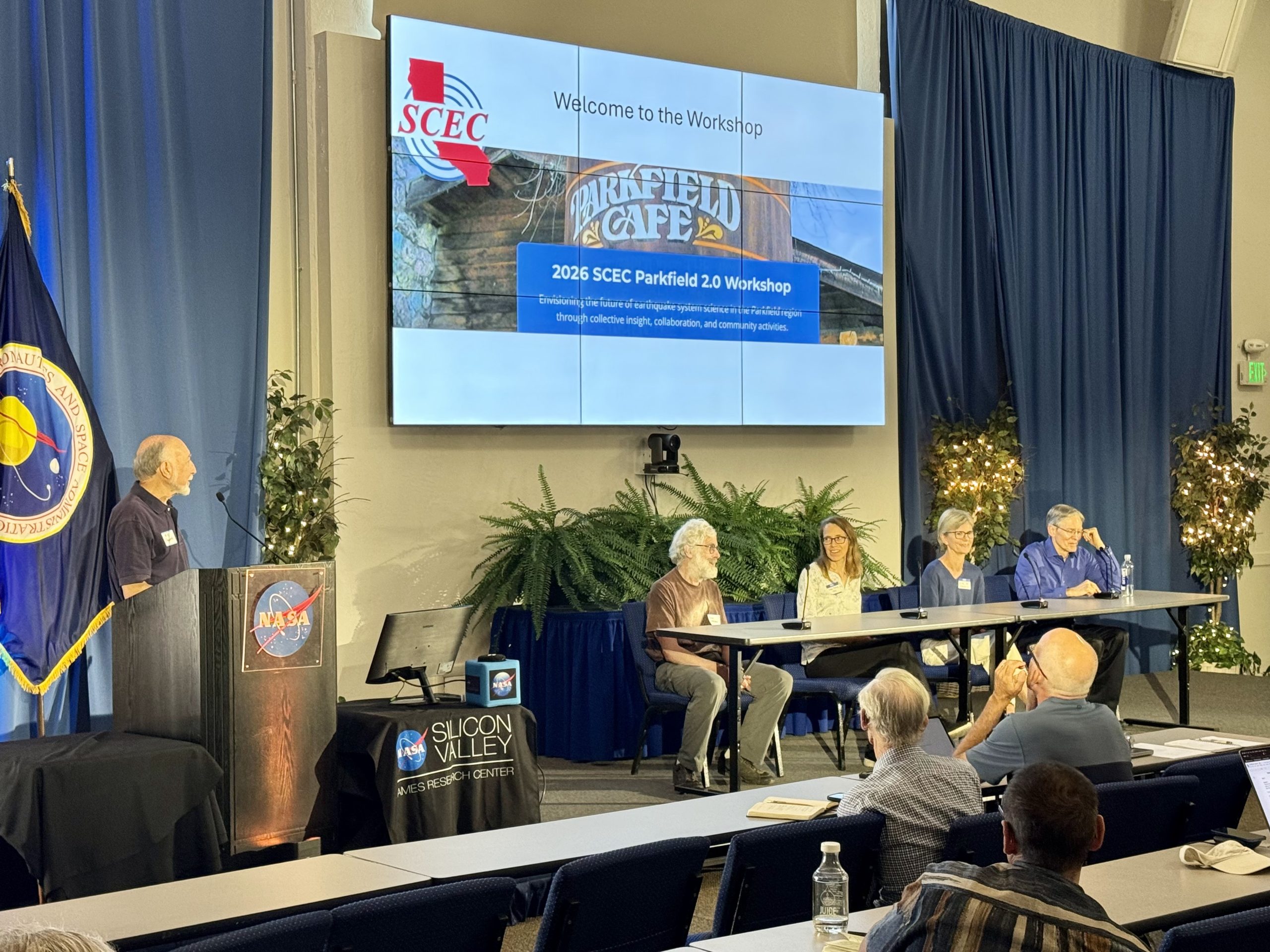
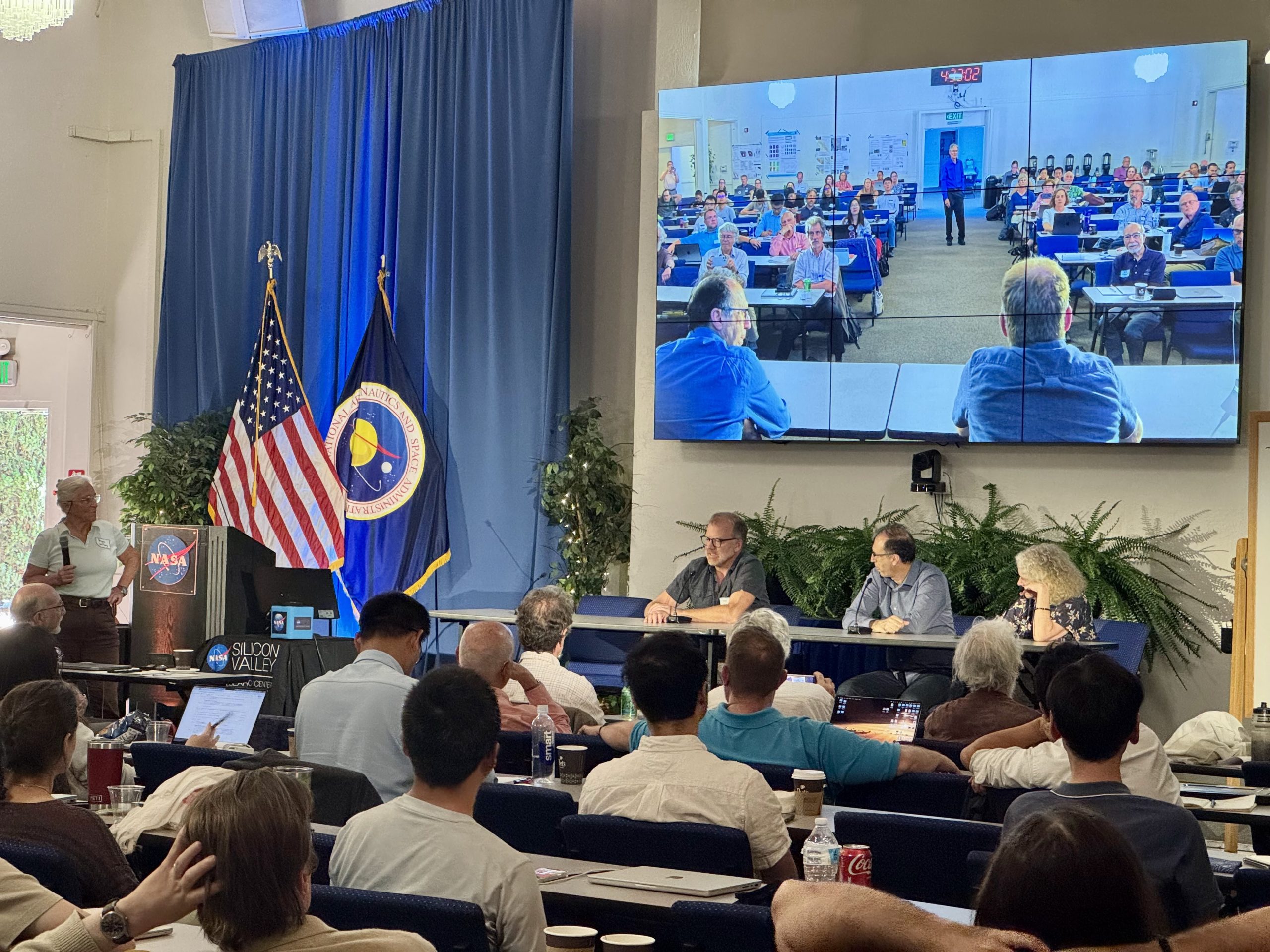
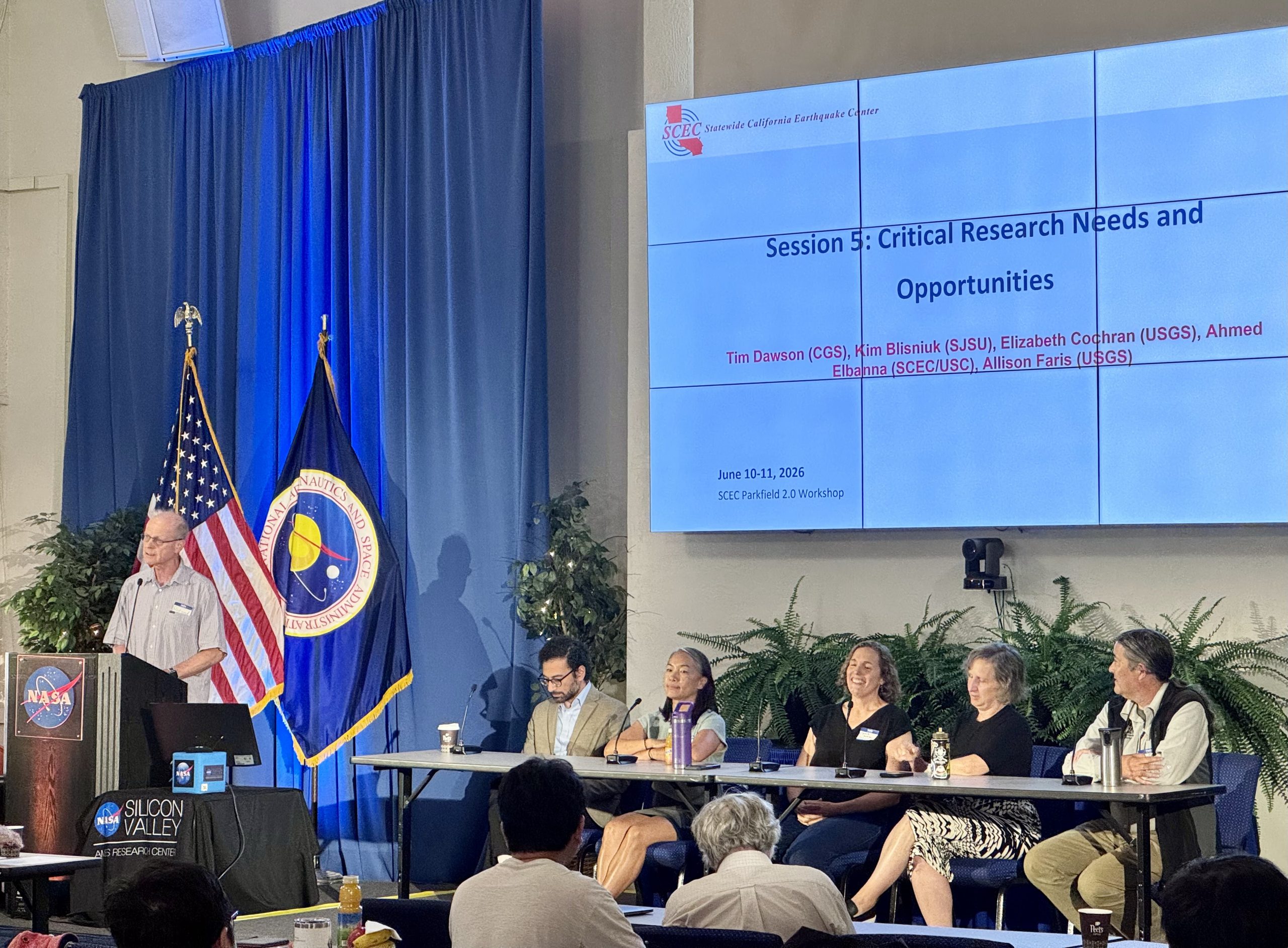
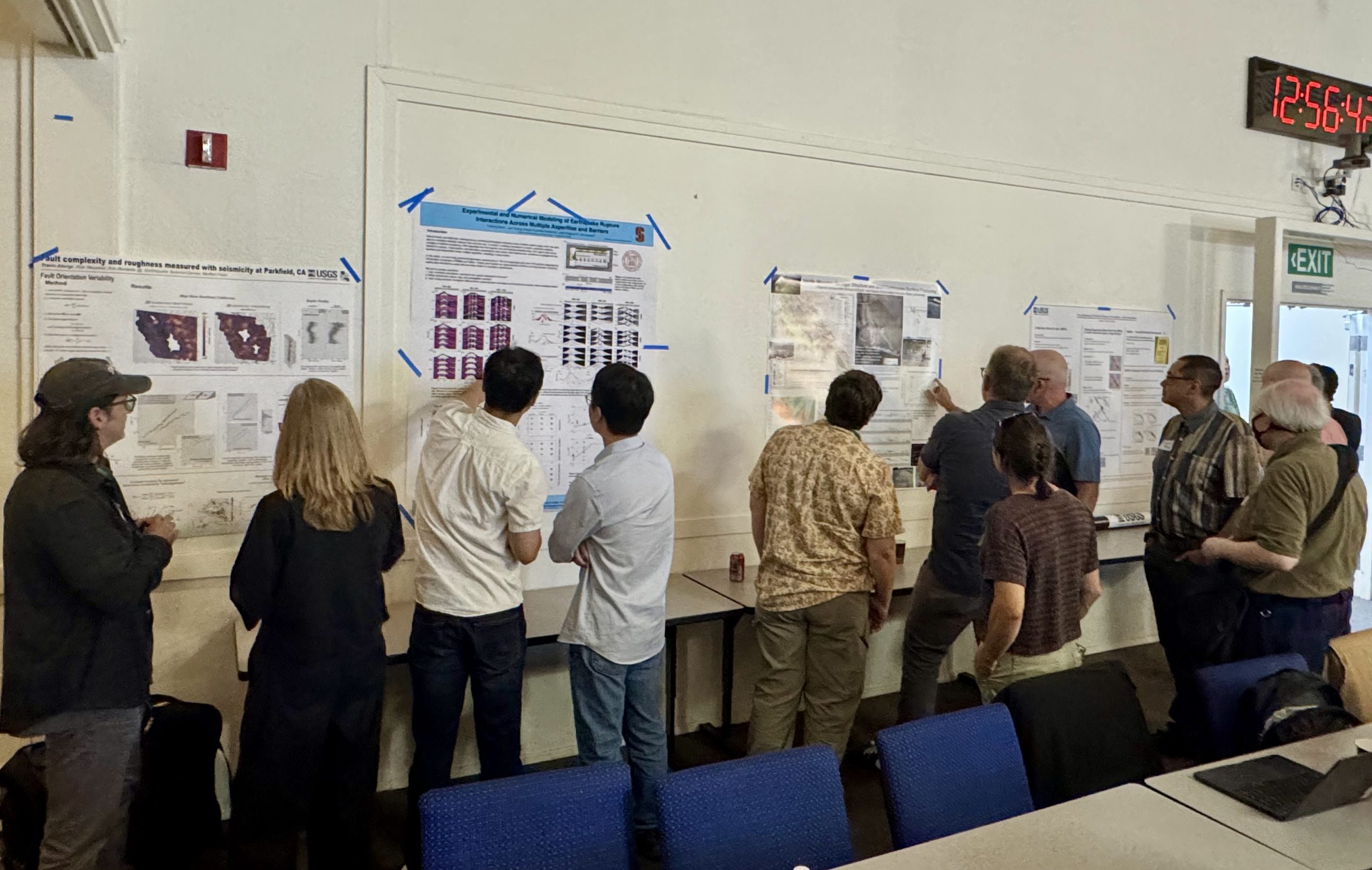
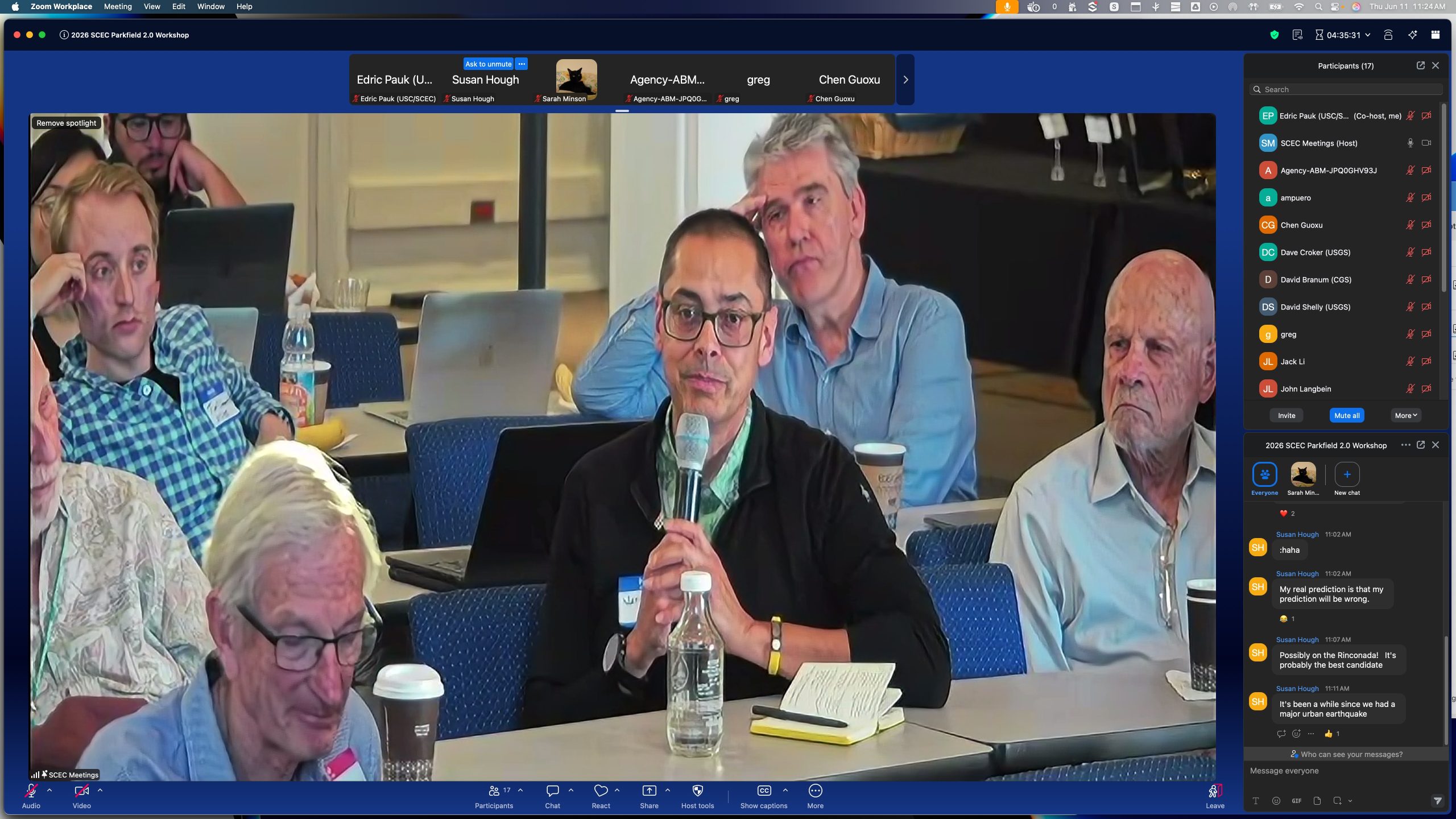
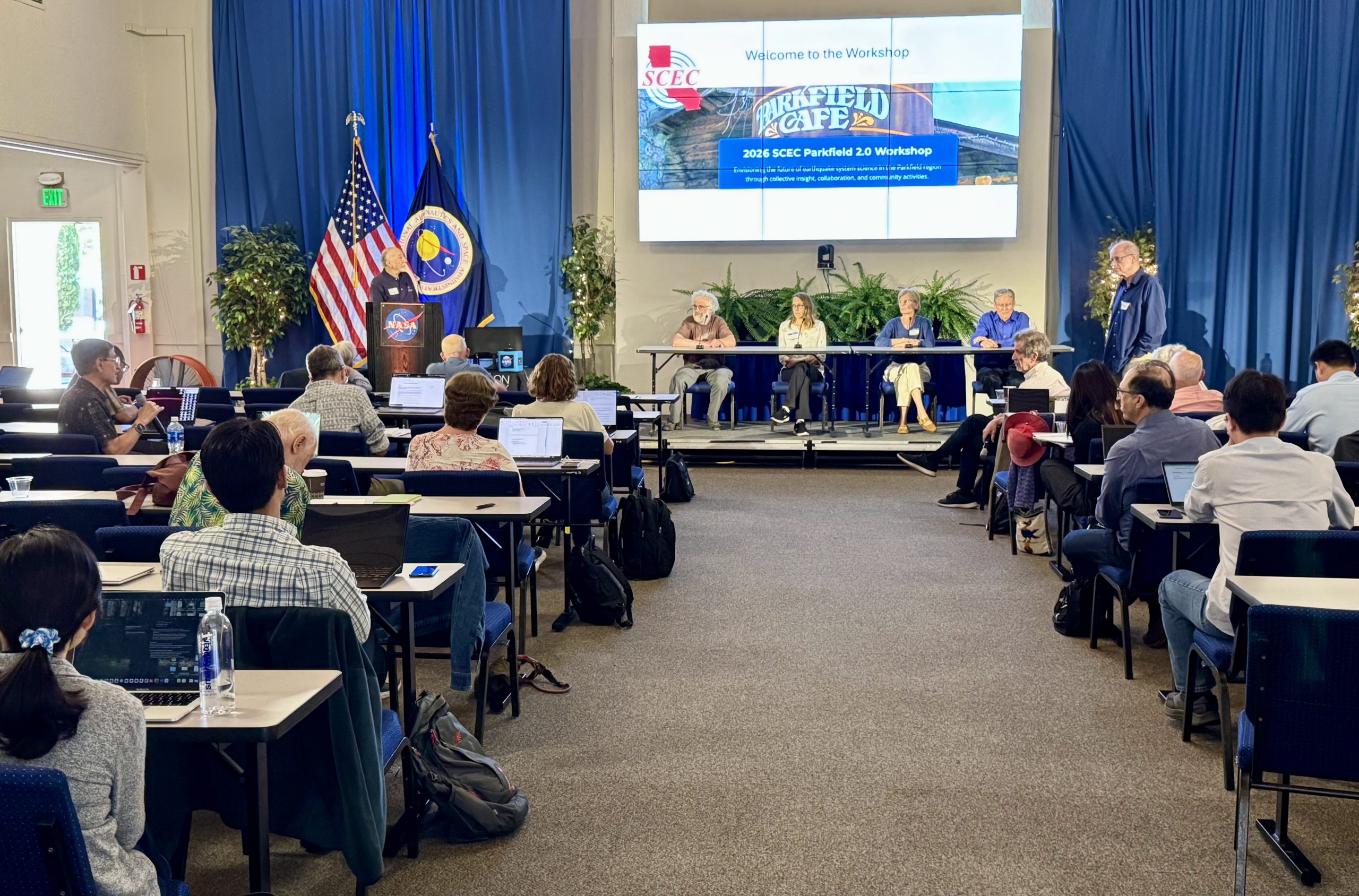
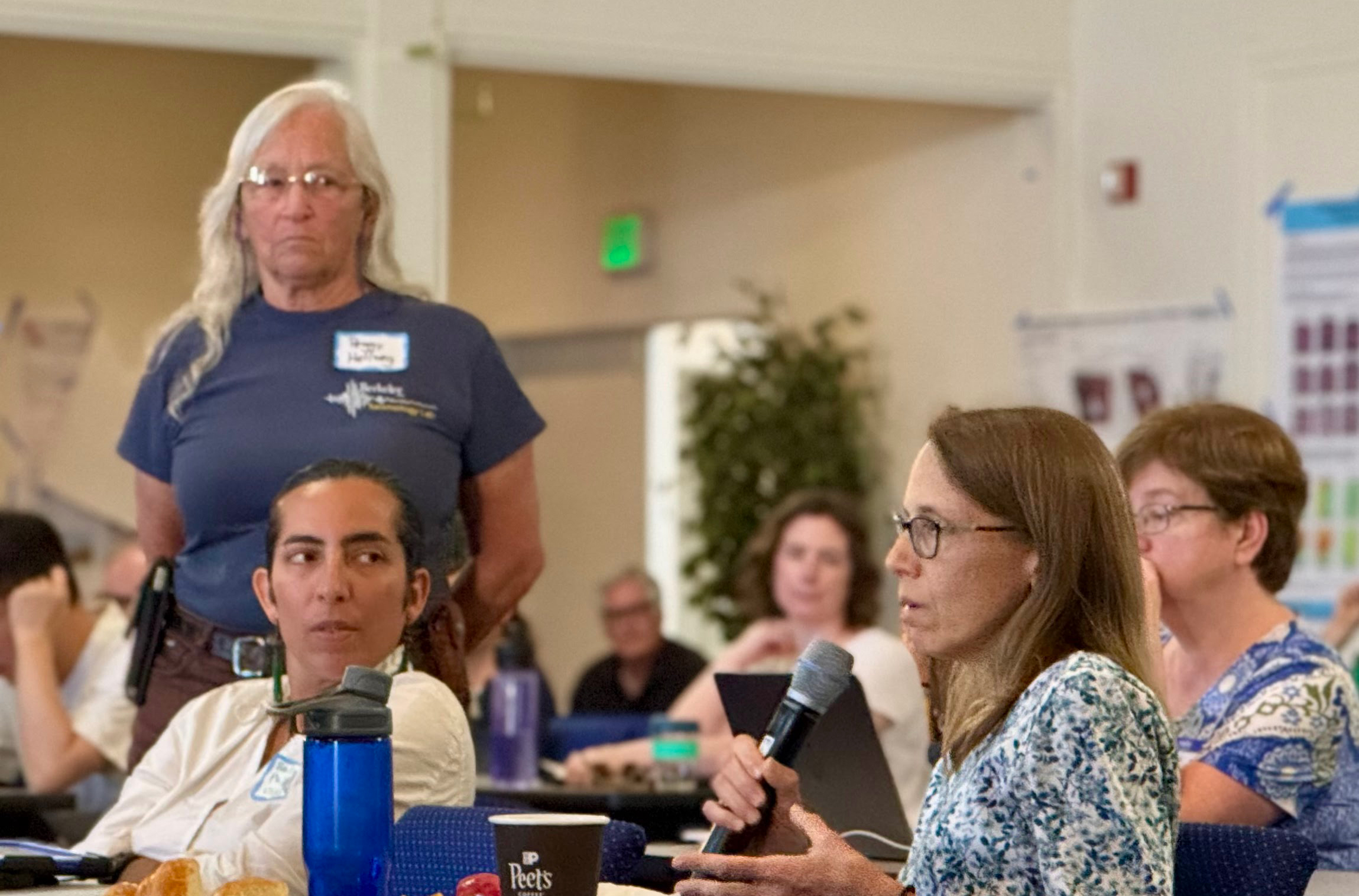
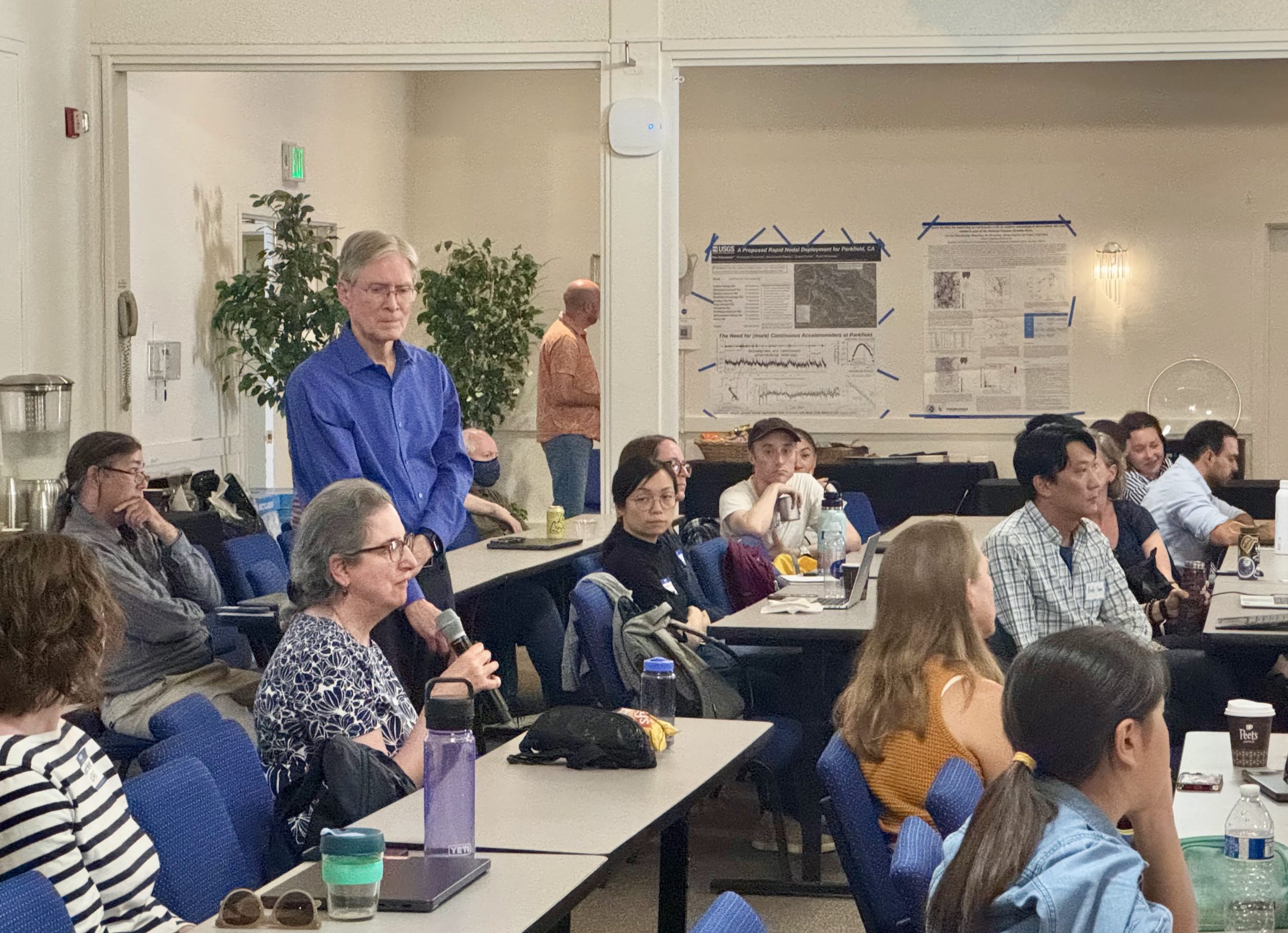
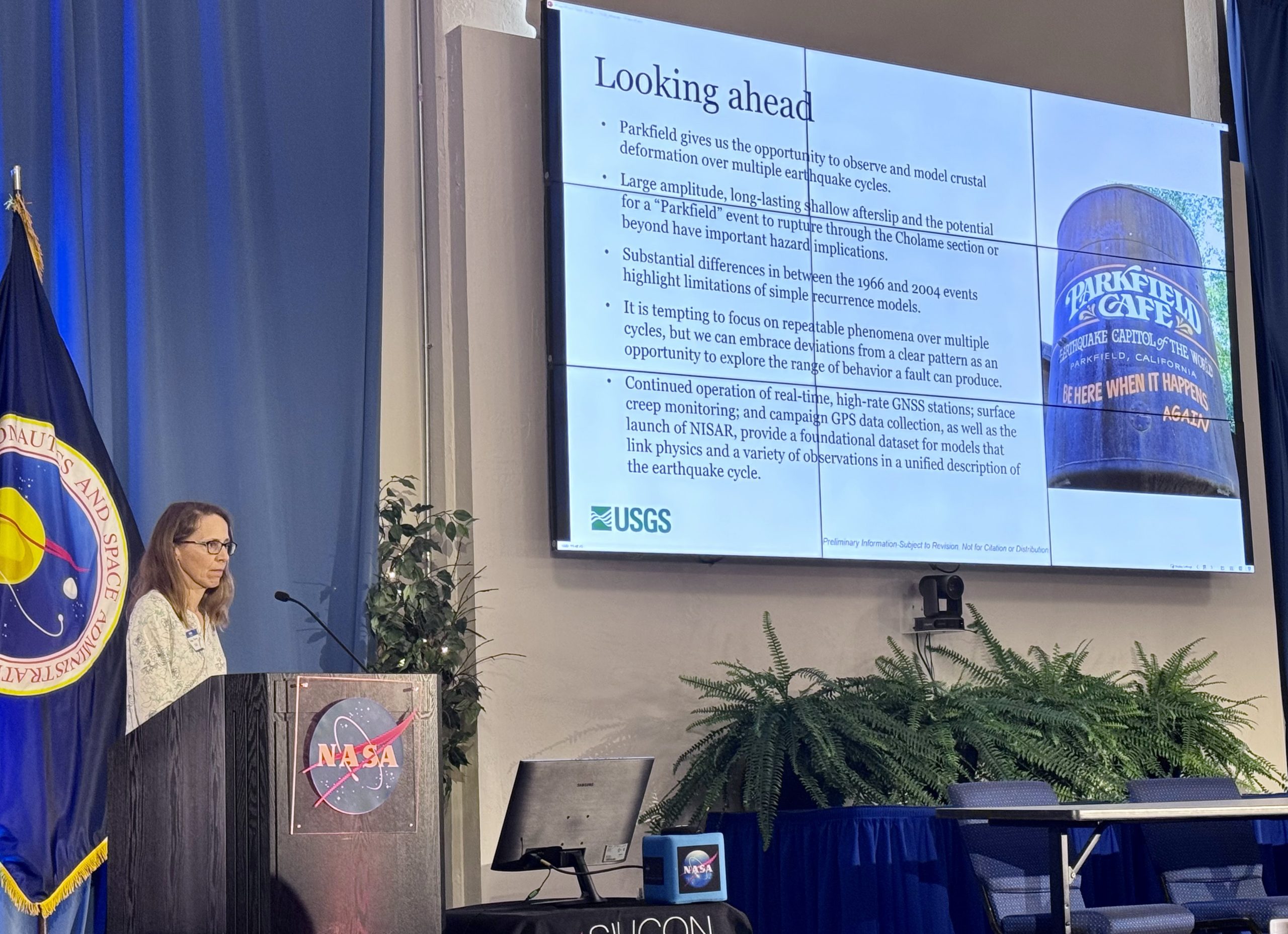
The 2026 SCEC Parkfield 2.0 Workshop convened 110 participants to define a shared vision for the future of Parkfield research. Over two days, invited presentations, panel discussions, poster sessions, and interdisciplinary breakout groups identified scientific priorities, infrastructure investments, and coordinated community activities needed to advance Parkfield as a next-generation earthquake observatory. SEE PHOTOS
The workshop presentations, panel discussion, and breakout sessions established a shared vision for Parkfield 2.0 and identified scientific priorities, infrastructure needs, and coordinated community activities to guide the next generation of Parkfield research. Highlights are summarized below, with additional detail available in the workshop report and the breakout session summaries.
All times below Pacific Standard Time (UTC -7)
Presentation materials may be viewed by clicking the links below. PLEASE NOTE: Files are the author’s property. They may contain unpublished or preliminary information and should only be used for reviewing the talk. Only the presentations for which SCEC has received permission to post publicly are included below.
| Time | Agenda Item | Presenter |
|---|---|---|
| 10:00 - 12:00 | Session 1: Introduction to Parkfield and State of Knowledge | |
| 10:00 - 10:15 | Introduction | Bill Ellsworth |
| 10:15 - 10:30 | Parkfield V1.0: 1985-2004 | John Langbein |
| 10:30 - 10:45 | Geodetic imaging of earthquake cycles at Parkfield (PDF) | Jessica Murray |
| 10:45 - 11:00 | Geophysical Insights into the 3D Structure of the Parkfield Region (PDF) | Cliff Thurber |
| 11:00 - 11:15 | USGS Instrumentation and Observation Activity at Parkfield: Current Status (PDF) | Liz Hearn |
| 11:15 - 12:00 | Discussion | |
| 12:00 - 13:00 | Lunch & Poster Session 1 | |
| 13:00 - 14:30 | Session 2: Geology and SAFOD Legacy | |
| 13:00 - 13:15 | Attempts to discriminate between paleoseismic evidence of creep and paleoseismic ruptures along the central San Andreas fault (PDF) | Nathan Toke |
| 13:15 - 13:30 | Do earthquakes rupture through the creeping section of the San Andreas Fault? Evidence from geology | Belle Philibosian |
| 13:30 - 13:45 | SAFOD: Lessons Learned, Current Status and Future Possibilities (PDF) | Steve Hickman |
| 13:45 - 14:00 | "Parkfield in the lab" what has/can rock mechanics do to address Parkfield’s driving questions | Sara Beth Cebry |
| 14:00 - 14:30 | Discussion | |
| 14:30 - 15:00 | Break & Poster Session 2 | |
| 15:00 - 16:30 | Session 3: Parkfield Earthquakes and Fault Behavior | |
| 15:00 - 15:15 | Tremor and Low-Frequency Earthquakes at Parkfield: A window into the lower-crustal San Andreas Fault | David Shelly |
| 15:15 - 15:30 | Fault creep, surface rupture, and aftership near Parkfield California: past and current phenomena and future possibilities | Steve DeLong |
| 15:30 - 15:45 | Revisiting Parkfield Mainshocks: A characteristic Snowflake Model | Sue Hough |
| 15:45 - 16:00 | Strong Ground Motion Observations from the CSMIP Parkfield Array: 2004 Data, Comparisons, and Network Evolution | Hamid Haddadi |
| 16:00 - 16:30 | Discussion | |
| 16:30 - 17:00 | Lightning Talks | |
| 17:00 - 18:30 | Dinner & Breakout Session 1: Identifying Grand Challenges |
| Time | Agenda Item | Presenter |
|---|---|---|
| 07:00 - 08:30 | Breakfast & Poster Session 2 | |
| 08:30 - 10:00 | Session 4: Geodesy and Earthquake Cycles | |
| 08:30 - 08:45 | Numerical Modeling of Parkfield Repeating Earthquakes: Stress Drops, Synchronization, and Aseismic Slip (PDF) | Semechah Lui |
| 08:45 - 09:00 | Parkfield earthquakes: lessons from geodesy (PDF) | Yuri Fialko |
| 09:00 - 09:15 | Simulating and observing earthquake cycles through off-fault deformation | Yihe Huang |
| 09:15 - 09:30 | How are interseismic, co-seismic, and post-seismic observations of Mw 6 Parkfield related to each other? Insights from physics-based modeling and questions to the future event(s) | Nadia Lapusta |
| 09:30 - 10:00 | Discussion | |
| 10:00 - 10:30 | Poster Session 3 (and coffee/tea hosted by SCEC) | |
| 10:30 - 12:00 | Session 5: Critical Research Needs and Opportunities | |
| 12:00 - 13:00 | Lunch | |
| 13:00 - 14:30 | Breakout Session 2: Developing Community Reports | |
| 14:30 - 15:00 | Break | |
| 15:00 - 16:30 | Session 6: Report‑Back and Wrap‑Up Discussion | |
| 16:30 | Workshop adjourns | |
| 16:30 - 17:00 | Meeting of the Workshop Organizing Committee |
The workshop featured 18 poster presentations spanning geology, geodesy, seismology, earthquake-cycle modeling, SAFOD investigations, and next-generation monitoring technologies. Complementing the invited presentations, the poster sessions highlighted both established and emerging Parkfield research while fostering discussion and collaboration across the communities shaping the Parkfield 2.0 vision.
| # | Last Name | First Name | Poster Title |
|---|---|---|---|
| 3 | Aguilar Suarez | Leonardo | Enhanced Earthquake Catalog for Parkfield |
| 5 | Blanpied | Michael | The NEHRP Post-Earthquake Investigations Program |
| 8 | Clements | Tim | The need for (more) continuous acceleration data in Parkfield, CA |
| 14 | Fang | Lihua | Trade space for time for inspecting an earthquake cycle by modern seismological observation: The central-southern part of the Sichuan-Yunnan rhombic block |
| 13 | Gong | Jianhua | A Tale of Two Faults: Comparing Long-Term Seismicity Patterns Along the Parkfield and Gofar Transform Faults |
| 1 | Harris | Ruth | Four decades of Parkfield Science Discoveries |
| 10 | Li | Linxuan | Ubiquitous Interactions and Subcritical Patches Explain the Irregularity of Repeating Earthquakes |
| 15 | Lin | Li-Chieh | The Full Kinematics of the Central San Andreas Fault using UAVSAR and Sentinel-1 data |
| 4 | Margolis | Adam | An Updated San Andreas Fault Geometry in Parkfield, California |
| 18 | Arrowsmith | Ramon | Middle Mountain Geologic Structure and 2004 Earthquake Surface Fracturing |
| 17 | Peng | Zhigang | Re-estimating the early aftershock decay rate and the aftershock duration of the 2004 M6.0 Parkfield earthquake |
| 16 | Moore | Diane | Deformation history of cataclasite recovered in SAFOD core adjacent to the SDZ |
| 9 | Shrestha | Rajani | Linear Streaks of Seismicity Along the San Andreas |
| 12 | Sun | Yudong | Experimental and Numerical Modeling of Earthquake Rupture Interactions Across Multiple Asperities and Barriers |
| 6 | Yoon | Clara | Preparing a rapid enhanced aftershock catalog workflow for the next Parkfield earthquake |
| 7 | Zhang | Hao | Imaging the rupture of next Parkfield earthquakes with Distributed Acoustic Sensing |
| 11 | Zhang | Wenqiang | Adjoint-based inversion for stress and frictional parameters in 3D dynamic earthquake rupture models |
| 2 | Alongi | Travis | Fault zone complexity and roughness measured with seismicity at Parkfield |
The workshop brought together 110 participants from universities, government agencies, and national laboratories in the United States and abroad, representing expertise in geology, geodesy, seismology, geophysics, rock mechanics, numerical modeling, and earthquake engineering. This broad interdisciplinary participation supported the development of a shared vision for Parkfield 2.0, fostered collaboration across observational and modeling communities, and helped identify coordinated priorities for future Parkfield research.
| Last Name | First Name | Organization |
|---|---|---|
| Aguilar Suarez | Leonardo | Stanford University |
| Alongi | Travis | U.S. Geological Survey |
| Ampuero | Jean-Paul | Université Côte d'Azur |
| Arrowsmith | Ramon | Arizona State University |
| Atterholt | James | U.S. Geological Survey |
| Baden | Curtis | U.S. Geological Survey |
| Bakun | William | U.S. Geological Survey (Retired) |
| Baltay | Annemarie | U.S. Geological Survey |
| Barall | Michael | U.S. Geological Survey |
| Barbour | Andy | U.S. Geological Survey |
| Belyalova | Alina | Stanford University |
| Bilham | Roger | University of Colorado |
| Biondi | Ettore | Stanford University |
| Blanpied | Michael | U.S. Geological Survey |
| Blisniuk | Kim | San Jose State University |
| Bolton | Chas | University of Texas at Austin |
| Branum | David | California Geological Survey |
| Burgmann | Roland | University of California, Berkeley |
| Can | Birsen | |
| Carpenter | Brett | University of Oklahoma |
| Castillo | Emmanuel | |
| Catchings | Rufus | U.S. Geological Survey |
| Cebry | Sara | U.S. Geological Survey |
| Clements | Timothy | U.S. Geological Survey |
| Cochran | Elizabeth | U.S. Geological Survey |
| Croker | Dave | U.S. Geological Survey |
| D'Agostino | Nicola | Istituto Nazionale di Geofisica e Vulcanologia |
| Danré | Philippe | Ecole Normale Supérieure |
| Davis | Karen | U.S. Geological Survey |
| Dawson | Tim | California Geological Survey |
| DeLong | Stephen | U.S. Geological Survey |
| Delorey | Andrew | Los Alamos National Laboratory |
| Elbanna | Ahmed | USC/SCEC |
| Ellsworth | Bill | Stanford University |
| Fang | Lihua | China Earthquake Administration |
| Faris | Allison | U.S. Geological Survey |
| Fialko | Yuri | University of California, San Diego |
| Funning | Gareth | University of California, Riverside |
| Gallovic | Frantisek | Charles University, Prague |
| Gong | Jianhua | Indiana University |
| Guns | Katherine | U.S. Geological Survey |
| Guo | Hao | University of Wisconsin-Madison |
| Guoxu | Chen | University of Wisconsin-Madison |
| Haddadi | Hamid | California Geological Survey |
| Hagos | Lijam | California Geological Survey |
| Hanagan | Catherine (Cassie) | U.S. Geological Survey |
| Hardebeck | Jeanne | U.S. Geological Survey |
| Harris | Ruth | U.S. Geological Survey |
| Hearn | Elizabeth | U.S. Geological Survey |
| Hellweg | Peggy | University of California, Berkeley |
| Hill | Ryley | U.S. Geological Survey |
| Hough | Susan | U.S. Geological Survey |
| Hu | Yanlan | Stanford University |
| Huang | Yihe | University of Michigan |
| Igonin | Nadine | University of Texas at Dallas |
| Jeppson | Tamara | U.S. Geological Survey |
| Kuo | Li-Wei | National Central University |
| Langbein | John | U.S. Geological Survey |
| Lapusta | Nadia | California Institute of Technology |
| Li | Linxuan | California Institute of Technology |
| Li | Jack | California Institute of Technology |
| Lin | Li-Chieh | University of California, Riverside |
| Liu | Yajing | McGill University |
| Louage | Rémi | École Normale Supérieure |
| Lu | Weifan | Columbia University |
| Lui | Semechah | University of Toronto |
| Madden | Elizabeth | San Jose State University |
| Margolis | Adam | University of California, Riverside |
| Martínez-Garzón | Patricia | GFZ Helmholtz Centre for Geosciences |
| McGuire | Jeff | U.S. Geological Survey |
| Mei | Cheng | Columbia University |
| Meng | Xiaofeng | USC/SCEC |
| Minson | Sarah | U.S. Geological Survey |
| Miranda | Raul | University of California, Berkeley |
| Moore | Diane | U.S. Geological Survey (Retired) |
| Murray | Jessica | U.S. Geological Survey |
| Nevitt | Josie | U.S. Geological Survey |
| Parker | Grace | U.S. Geological Survey |
| Pauk | Edric | USC/SCEC |
| Peng | Zhigang | Georgia Tech |
| Perez Silva | Andrea Carolina | University of California, Berkeley |
| Philibosian | Belle | U.S. Geological Survey |
| Rademacher | Horst | Independent |
| Roecker | Steven | Rensselaer Polytechnic Institute (Emeritus) |
| Rong | Bo | University of California, Berkeley |
| Rubinstein | Justin | U.S. Geological Survey |
| Schultz | Adam | Oregon State University |
| Segall | Paul | Stanford University |
| Shelly | David | U.S. Geological Survey |
| Shrestha | Rajani | California Institute of Technology |
| Si | Xu | University of California, Berkeley |
| Sone | Hiroki | University of Wisconsin-Madison |
| Song | Junhao | University of California, Berkeley |
| Sun | Yudong | Stanford University |
| Swinscoe | Rebecca | University of California, Berkeley |
| Taira | Taka'aki | University of California, Berkeley |
| Thatcher | Wayne | U.S. Geological Survey |
| Thurber | Clifford | University of Wisconsin-Madison |
| Toke | Nathan | Utah Valley University |
| van der Elst | Nicholas | U.S. Geological Survey |
| van der Heiden | Vincent | GFZ Helmholtz Centre for Geosciences |
| Vargas | Javier Ojeda | Universidad Nacional Autónoma de México |
| Vermeer | Jessie | U.S. Geological Survey |
| Wang | Lei | University of Wisconsin-Madison |
| Wesson | Rob | U.S. Geological Survey (Retired) |
| Yoon | Clara | U.S. Geological Survey |
| Zhang | Hao | California Institute of Technology |
| Zhang | Wenqiang | Stanford University |
| Zhu | Weiqiang | University of California, Berkeley |
The workshop was initially planned for approximately 75 participants, selected through an application process based on their statements of interest and potential contributions to the workshop objectives. Strong interest in the workshop prompted organizers to expand participation beyond the original target while maintaining a balanced representation of expertise across career stages and preserving the collaborative format of the meeting.
The workshop registration fee was $115, which covered meals and breaks listed on the June 10–11 agenda. Travel support was available to help offset travel, lodging, and/or meal expenses associated with attending the workshop. Students, early-career researchers, and participants without institutional funding were especially encouraged to request support as part of the application process.
The Statewide California Earthquake Center (SCEC) fosters a diverse and inclusive community where everyone feels safe, productive, and welcome. We expect all participants in SCEC-supported events to uphold this commitment by adhering to the SCEC Activities Code of Conduct.
The SCEC Annual Meeting brings together 400-500 participants worldwide to share breakthroughs, assess progress, and chart a collaborative path for earthquake science. All of the Center activities are presented, analyzed, and woven into a set of priorities for SCEC to pursue in the future.