Explore earthquake rupture and creep in shallow earth materials and dive into technologies and strategies for studying these processes
Date: November 10-11, 2025
Location: Hilton Palm Springs, California
Workshop Organizers: William Griffith (Ohio State), Katherine Scharer (USGS), Alexis Ault (Utah State)
SCEC Award: 25246
The 2025 SCEC Workshop on Earthquake Rupture and Creep in Shallow Earth Materials brought together researchers from across the SCEC community to improve understanding of how shallow (<3 km) Earth materials influence earthquake rupture, interseismic creep, surface deformation, and strong ground motions. Because shallow on- and off-fault materials comprise the geotechnical layer that controls how seismic energy reaches Earth’s surface, how deformation is expressed, and how the geologic record of earthquakes is preserved, the workshop sought to better integrate field observations, laboratory experiments, geodesy, geophysics, earthquake engineering, and numerical modeling. The workshop began with a field trip to the Salt Creek paleoseismic site, Ferrum, and the Mecca Hills along the Southern San Andreas Fault, where participants examined seismic slip, steady and transient creep, strain localization and delocalization, and the influence of fault geometry, lithology, and shallow fault-zone structure on earthquake deformation. Invited presentations and interdisciplinary discussions then identified priorities for future observations, instrumentation, and multidisciplinary field studies needed to better characterize shallow deformation processes across California. The workshop established a shared vision for building an interdisciplinary Shallow Earth Materials (SEM) research community, strengthening collaboration among observational, experimental, engineering, and modeling disciplines, improving integration with SCEC Community Earth Models (CEMs), including the Community Velocity Model (CVM) and Community Rheology Model (CRM), and and establishing the foundation for a SCEC Technical Activity Group (TAG) proposal on Shallow Earth Materials (SEM) to coordinate future research, observations, and community engagement.
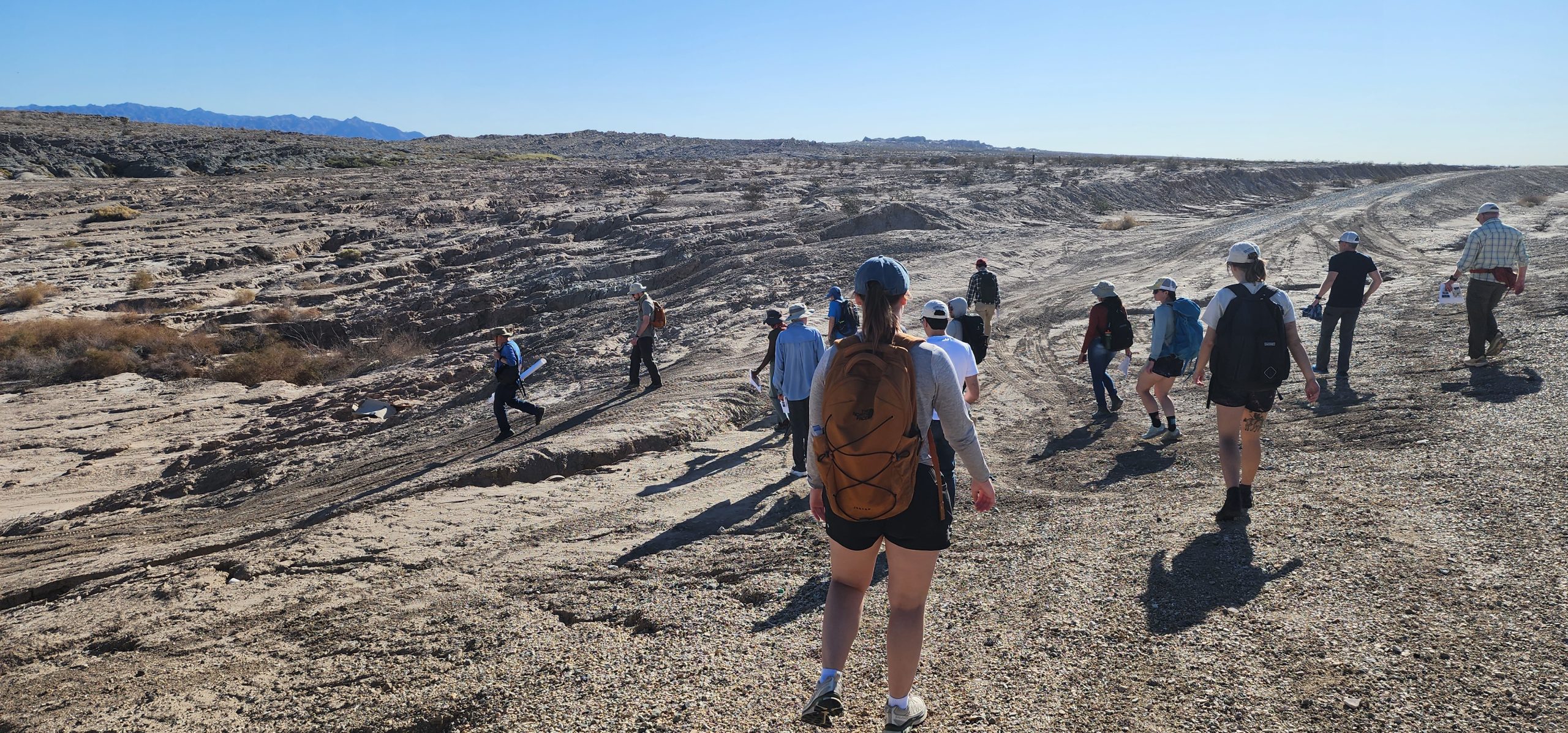
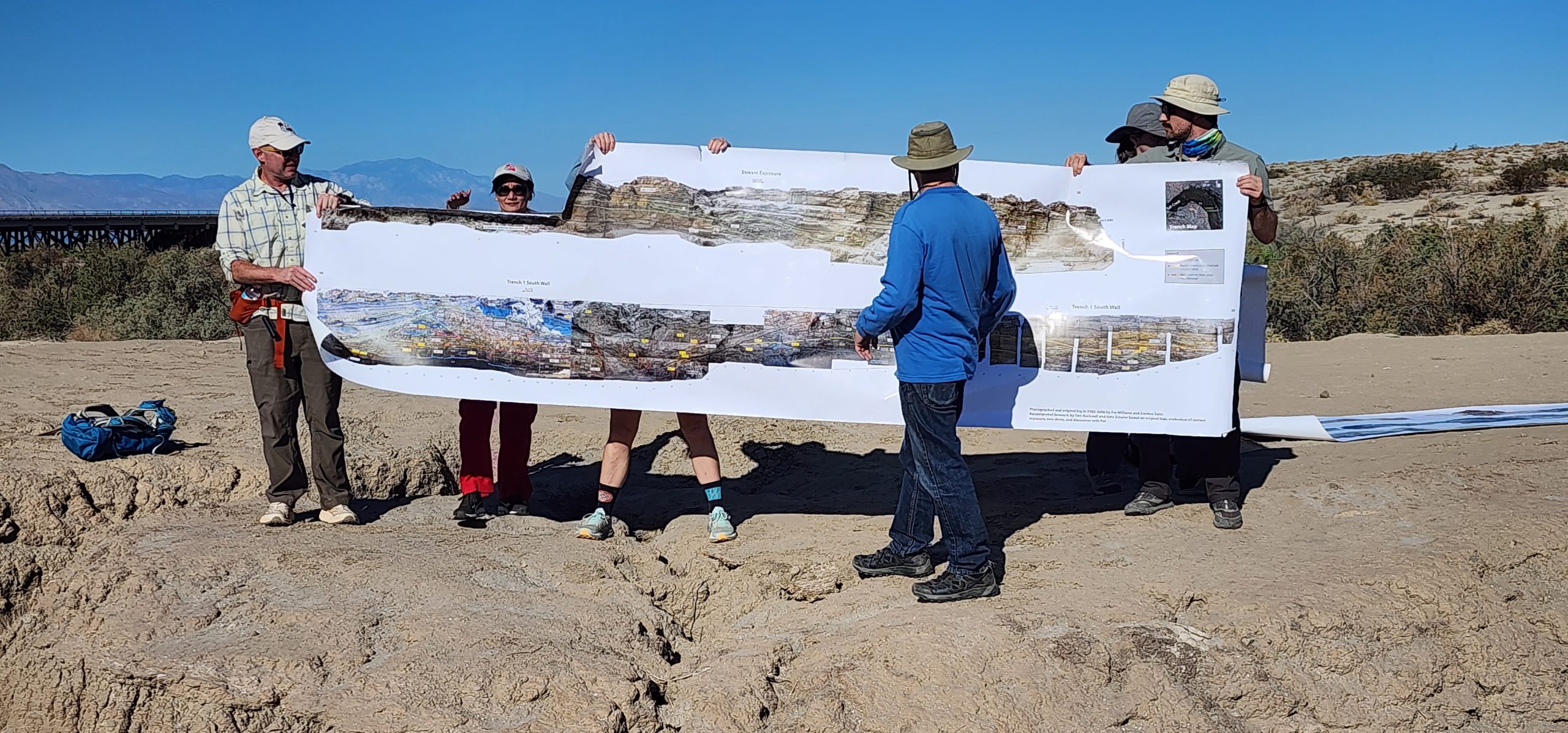
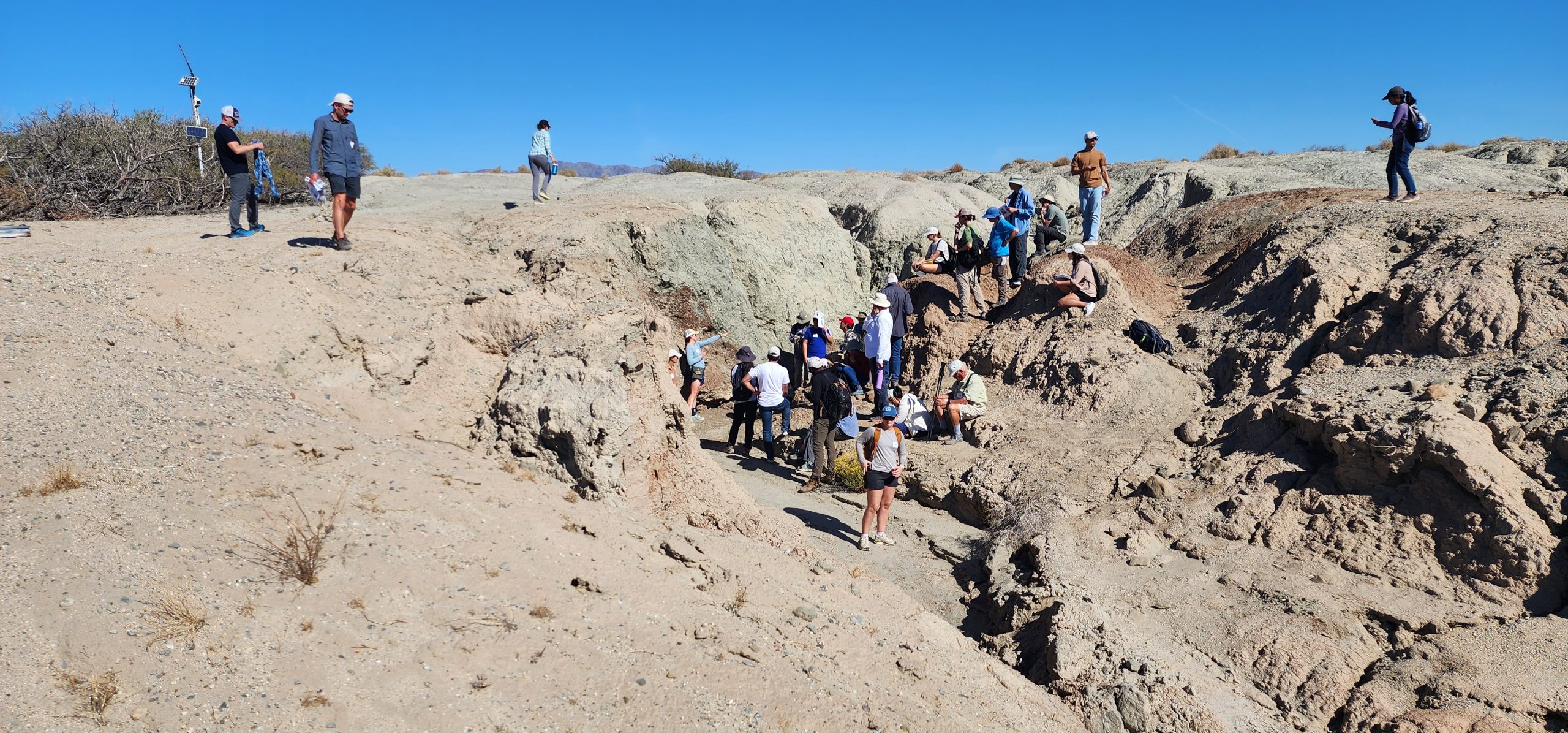
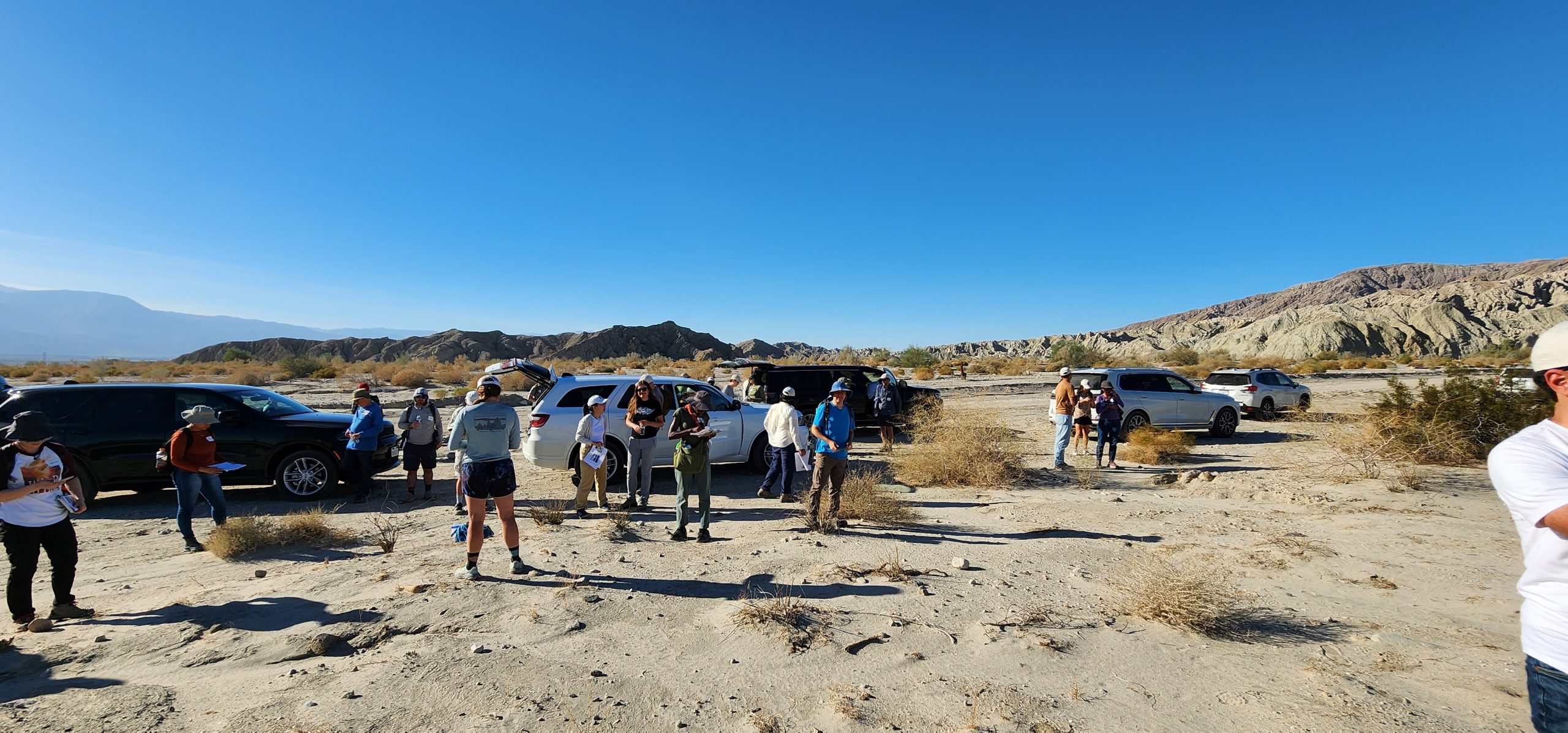
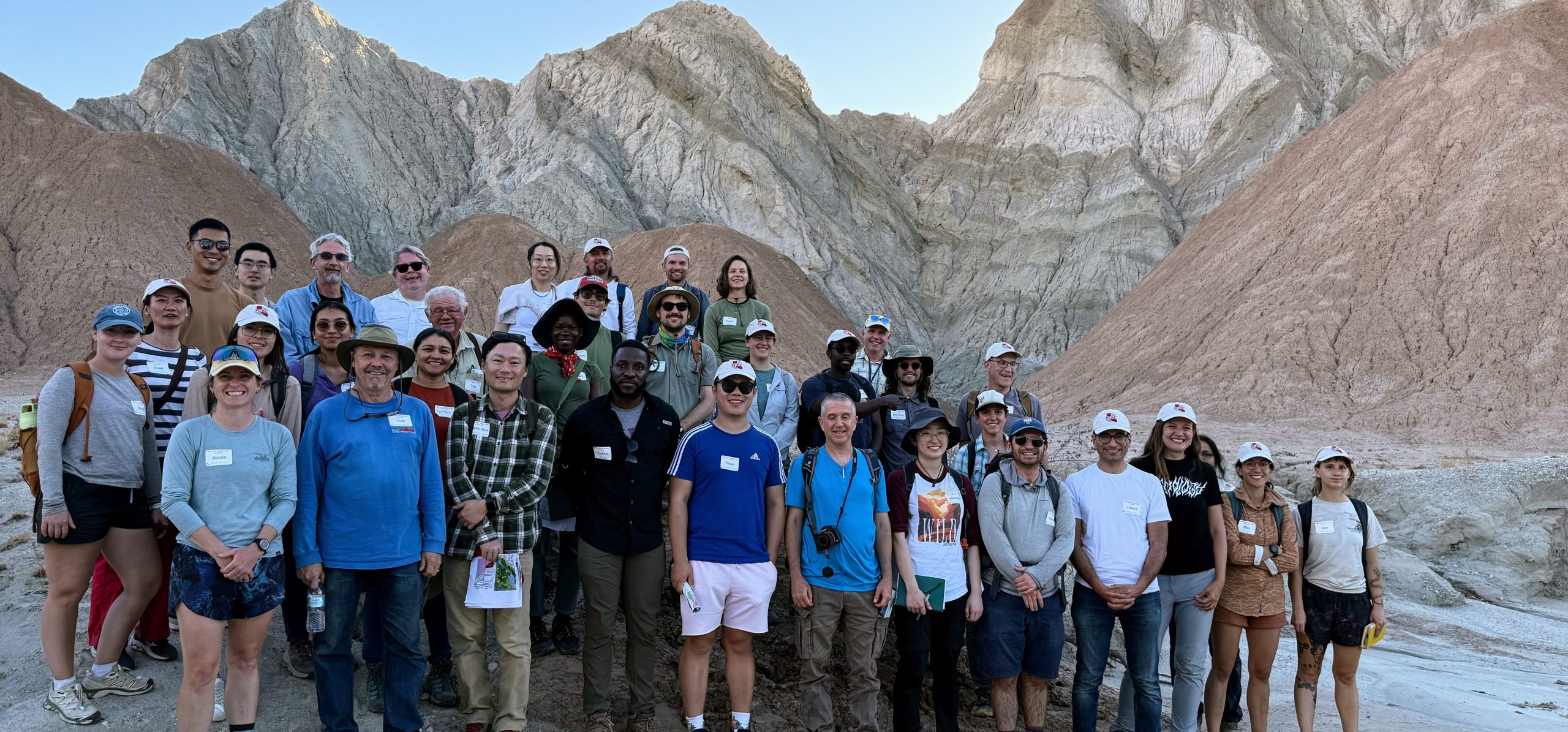
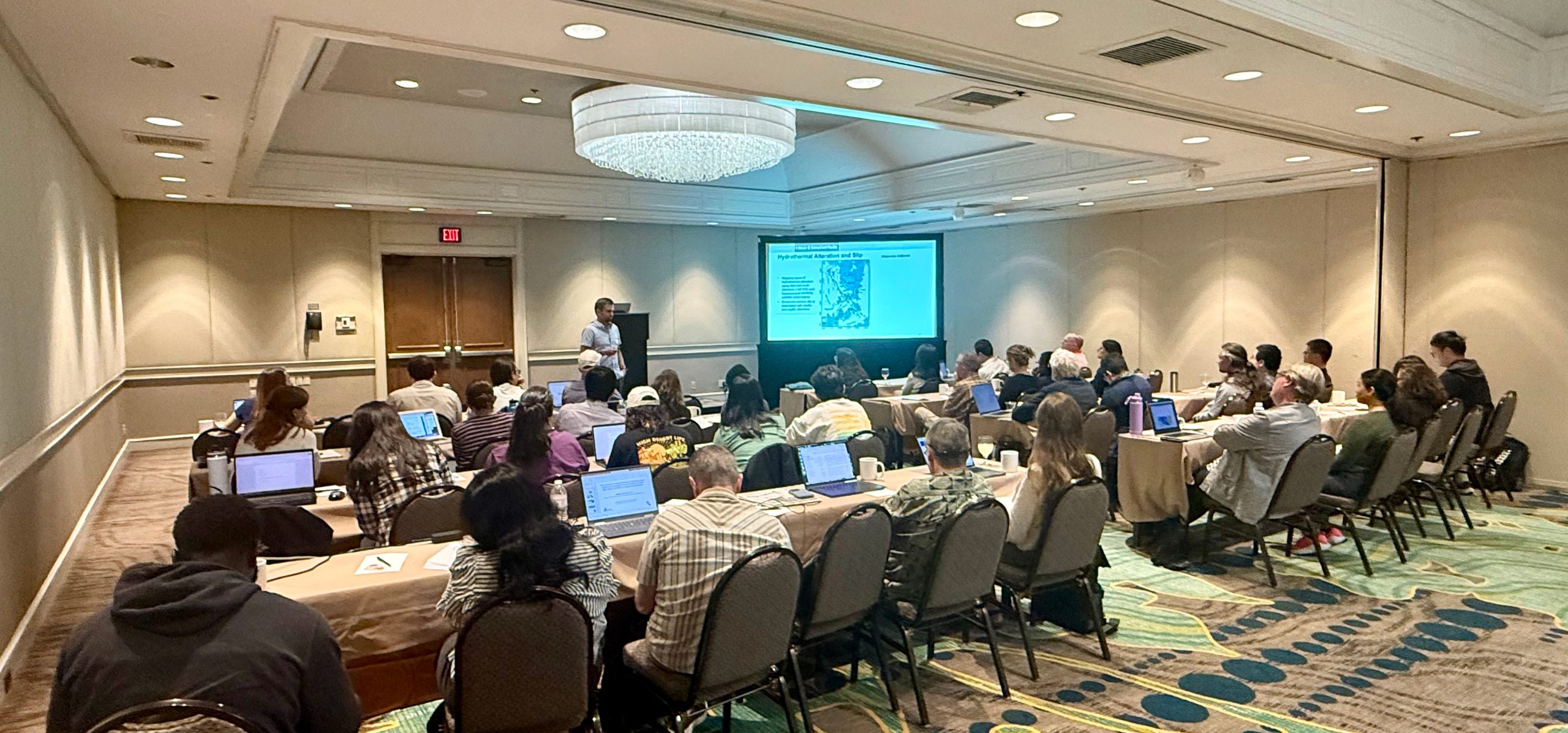
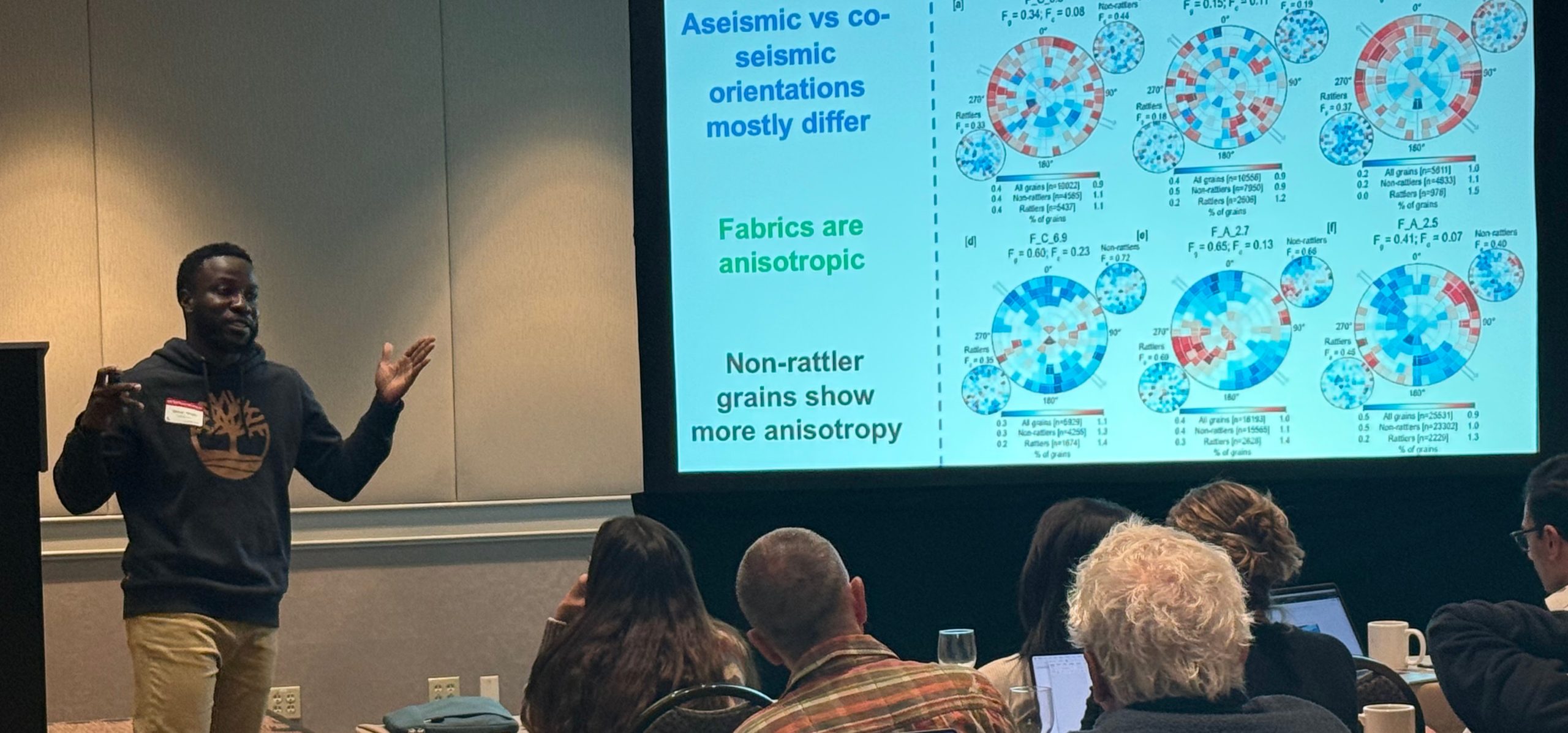
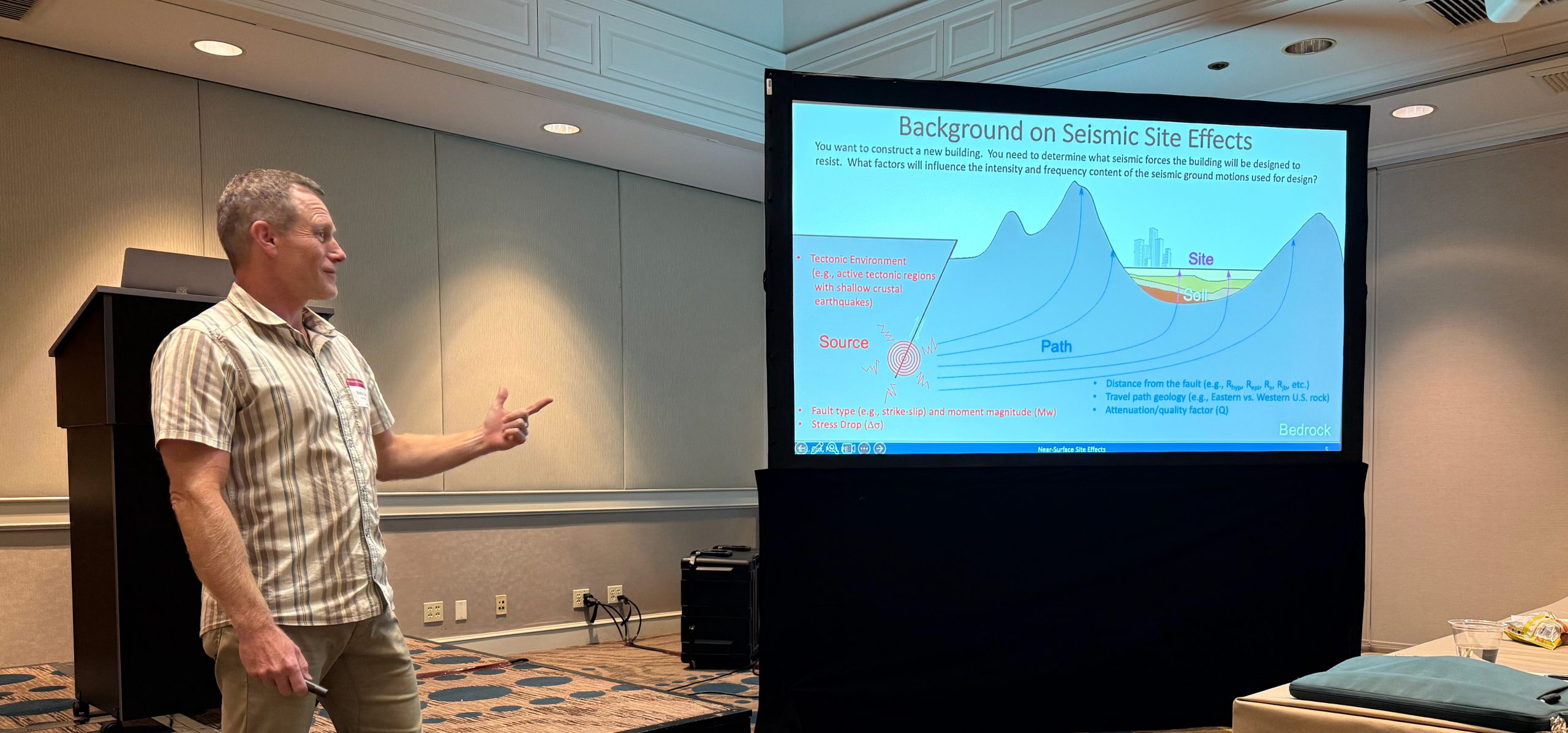
The Shallow Earth Workshop brought together researchers from complementary observational, experimental, engineering, and modeling disciplines to develop a shared understanding of shallow Earth materials and their role in earthquake rupture, fault creep, and strong ground motions. The workshop established a common scientific framework that provided the foundation for the subsequent Shallow Earth Materials (SEM) Technical Activity Group proposal. SEE PHOTOS
The workshop produced several important scientific and community outcomes that will guide future research on earthquake rupture, fault creep, and the role of shallow Earth materials in earthquake deformation and ground motions. Highlights are summarized below, with additional detail available in the workshop report.
Griffith, W. A., Scharer, K. M., & Ault, A. K. (2026). Workshop Report: Earthquake Rupture and Creep in Shallow Earth Materials, Statewide California Earthquake Center. SCEC Contribution 15056
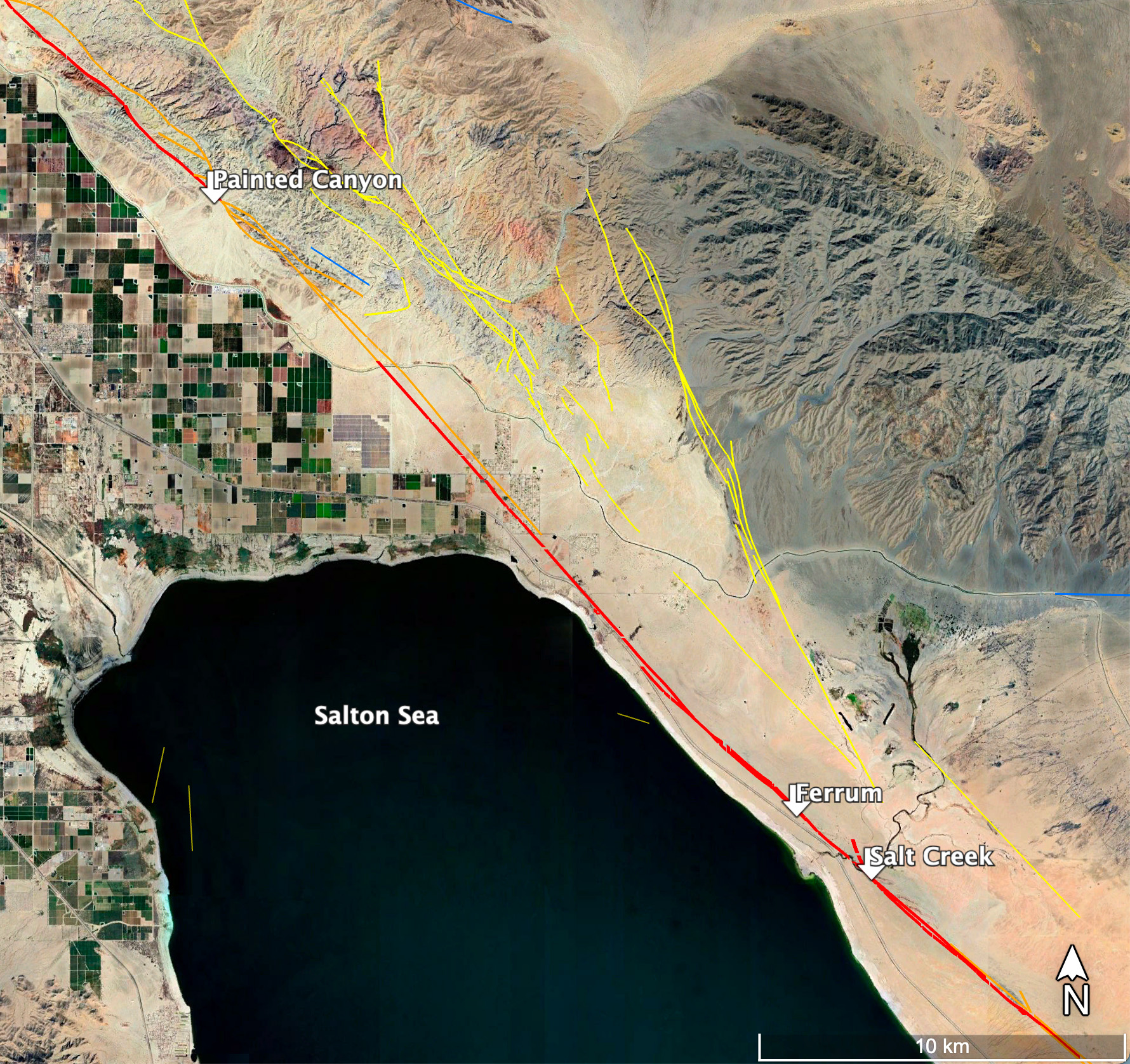
Field Trip to Salt Creek, Ferrum and Mecca Hills
Leaders: Alexis Ault (Utah State), Tom Rockwell (SDSU), Ashley Griffith (Ohio State)
The field trip focused on outcrops along the Southern San Andreas Fault system that exhibit seismic slip, steady and triggered creep, damage signatures indicative of strain partitioning across the earthquake cycle, and strain localization and delocalization observed in geodetic measurements of steady and transient creep. Participants explored fault localization and delocalization as a function of fault geometry, lithology and sedimentology, fabric development, and depth, as well as the role of different fault zone components in shallow seismic rupture propagation versus transient creep. Discussions compared geologic, geomorphic, geophysical, mechanical, and geodetic observations of deformation at these sites, highlighting the complementarities and differences among these datasets. The field trip focused on well-studied sites in southern California that provide exceptional geologic exposure and served as the foundation for the second day of the workshop, where these observations were extended to related problems and future research priorities across California. VIEW MAP
All times are Pacific Standard Time (UTC-8).
| Time | Activity | Presenter(s) |
|---|---|---|
| 06:30 – 07:15 | Breakfast | |
| 07:15 – 07:30 | Gather in Hilton Lobby, pick up lunch | |
| 07:30 – 08:45 | Depart, travel to Salt Creek, stop 1 at 33.445053, -115.842545 | |
| 08:45 – 09:00 | Welcome and overview | Ashley Griffith, Kate Scharer, Alexis Ault and Tom Rockwell |
| 09:00 – 11:00 | Stop 1: (a) Salt Creek paleoseismic site and (b) creepmeter | Kate Scharer and Tom Rockwell |
| 11:00 – 11:15 | Transition to Ferrum site, stop 2 at 33.455325, -115.855407 | |
| 11:15 – 12:45 | Stop 2: SSAF exposed at Ferrum Lunch at the outcrop, 12:00 | Ashley Griffith and Tom Rockwell |
| 12:45 – 13:15 | Transport to Painted Canyon, Mecca Hills, stop 3 at 33.605243, -116.022468 | |
| 13:15 – 16:15 | Stop 3: SSAF at Painted Canyon | Alexis Ault, Alex DiMonte, Brady Cox |
| 16:15 | Transport to Hilton | |
| 17:30 | Arrive back at Hilton |
Presentation slides may be viewed by clicking the links below. PLEASE NOTE: Files are the author’s property. They may contain unpublished or preliminary information and should only be used for reviewing the talk. Only the presentations for which SCEC has received permission to post publicly are included below.
| Time | Agenda Item | Speaker |
|---|---|---|
| 08:00 - 08:15 | Introduction | Ashley Griffith, Alexis Ault |
| 08:15 - 10:15 | Session 1: Geodetic observations of rupture and creep – spatio-temporal scales of deformation & data gaps | |
| 08:15 - 08:45 | Creepy dynamics in the Salton Trough: initiation, propagation, and sequences of aseismic rupture (PDF) | Kathryn Materna (CU Boulder) |
| 08:45 - 09:15 | Imaging earthquakes from optical remote sensing brings constraints on deformation localization and the related shallow slip deficit (PDF) | Solene Antoine (Caltech) |
| 09:15 - 09:45 | Impacts of Variable Hydrothermal Alteration on Coseismic Surface Slip during the 2019 Ridgecrest Earthquakes | Zachary Smith (UC Berkeley) |
| 09:45 - 10:15 | Discussion | |
| 10:15 - 10:30 | Break | |
| 10:30 - 12:00 | Session 2: Shallow geologic processes in response to rupture and creep | |
| 10:30 - 11:00 | Geodetically observed shallow deformation, geologically explained: frictional behavior of southern San Andreas fault gouge | Alex DiMonte (Utah State) |
| 11:00 - 11:30 | Memory, jamming, and multi-step yielding in near-surface fault zone sediments | Vashan Wright (UCSD) |
| 11:30 - 12:00 | Discussion | |
| 12:00 - 13:15 | Lunch | |
| 13:15 - 14:30 | Session 3: Properties of the geotechnical layer that affect surface deformation and ground motions | |
| 13:15 - 13:45 | How geotechnical layers affect surface deformation and ground motions: Insights from dynamic earthquake simulations (PDF) | Yihe Huang (U. Michigan) |
| 13:45 - 14:15 | Field and Data Processing Methods for Developing Shear Modulus and Damping Properties Needed to Model Near-Surface Site Effects in Design Ground Motions (PDF) | Brady Cox (Utah State) |
| 14:15 - 14:30 | Discussion | |
| 14:30 - 14:45 | Break | |
| 14:45 - 17:00 | Session 4: Observations, technologies, and target field areas in the statewide center | |
| 14:45 - 15:15 | Lessons from global strike-slip surface ruptures for California's next big earthquake (PDF) | Alba Rodriguez Padilla (Utah State) |
| 15:15 - 15:45 | A novel Bayesian near-surface geophysics approach to characterize bedrock fracture density and their control on bedrock weathering in sedimentary ridge-valley systems in California (PDF) | Mong-Han Huang (U. Maryland) |
| 15:45 - 16:30 | Brainstorming Session: next steps and future observations | Ashley Griffith, Alexis Ault |
| 16:30 - 17:00 | Group discussion, synthesis, closing remarks |
The workshop brought together 37 participants, including 21 early-career scientists, engaged in geological, geophysical, geodetic, geotechnical, and numerical investigations of near-surface fault zone deformation. Participants contributed expertise in earthquake geology, paleoseismology, geodesy, geophysics, geochemistry, rock mechanics, earthquake engineering, and numerical modeling.
| Last Name | First Name | Organization |
|---|---|---|
| Antoine | Solene | Caltech |
| Ault | Alexis | Utah State |
| Contreras Alvarez | Norma | UCR |
| Cox | Brady | Utah State |
| Dasent | Jhardel | UCSD |
| DiMonte | Alexandra | Utah State |
| Dor | Ory | Independent |
| Du | Nairong | UW- Madison |
| Evans | Eileen | CSU Northridge |
| Funning | Gareth | UCR |
| Gabriel | Alice | UCSD |
| Garcia | Ignacio | CICESE |
| Garcia | Leslie | Utah State |
| Griffith | Ashley | Ohio State |
| Heaton | Thomas | Caltech |
| Hofstetter | Celeste | UCR |
| Holt | William | Stony Brook |
| Huang | Mong-Han | Maryland |
| Huang | Yihe | Michigan |
| Huynh | Tran | USC-SCEC |
| Idzakovich | Matthew | Ohio State |
| Kang | Zhenyu | Oklahoma |
| Kindred Weigandt | Caje | USC |
| Kwagalakwe | Asenath | CSU Northridge |
| Lin | Li-Chieh | UCR |
| Lozos | Julian | CSUN |
| Marcus | Samuel | UW- Madison |
| Materna | Kathryn | U Colorado |
| Oglesby | David | UCR |
| Rockwell | Thomas | SDSU |
| Rodriguez Padilla | Alba | Utah State |
| Salinas | Matthew | USC |
| Smith | Zachary | UC Berkeley |
| Vashishtha | Mradula | Stony Brook |
| Waech | Maisy | Brown |
| Wang | Yuhan | Stanford /ETHZ |
| Wright | Vashan | UCSD/Scripps |
| Elbanna | Ahmed | USC |
The workshop registration fee was $170, which covered breakfasts, lunches, and the full-day field excursion during the two-day workshop (November 10–11). Participants were responsible for transportation to and from the Hilton Palm Springs, lodging, and dinners not included in the workshop program. SCEC provided additional travel support to 31 workshop participants, helping offset registration and travel expenses and supporting participation by researchers from a broad range of institutions and career stages. Priority for travel support was given to students, early-career researchers, and participants without institutional funding.
The Statewide California Earthquake Center (SCEC) fosters a diverse and inclusive community where everyone feels safe, productive, and welcome. We expect all participants in SCEC-supported events to uphold this commitment by adhering to the SCEC Activities Code of Conduct.
The SCEC Annual Meeting brings together 400-500 participants worldwide to share breakthroughs, assess progress, and chart a collaborative path for earthquake science. All of the Center activities are presented, analyzed, and woven into a set of priorities for SCEC to pursue in the future.